• Review: “The Great Gatsby”
  • Review: “Mud”
  • Review: “The Place Beyond the Pines”
  • Review: “Ginger & Rosa”
  • Review: “Stoker”
  • Review: “Side Effects”
  • Review: “Mama”
  • Review: “Zero Dark Thirty”
  • Review: “Gangster Squad”
  • Review: “Les Misérables”
  • Review: “This Is 40”
  • Review: “Any Day Now”
  • Review: “Anna Karenina”
  • Review: “Silver Linings Playbook”
  • Review: “Hitchcock”
  • Review: “Lincoln”
  • Review: “Life of Pi”
  • Review: “Flight”
  • Review: “Skyfall”
  • Review: “Argo”
  • Review: “The Perks of Being a Wallflower”
  • Review: “Looper”
  • Reviews: “Arbitrage” and “The Master”
  • Review: “The Words”
  • Review: “Celeste and Jesse Forever”
  • Review: “Lawless”
  • Review: “The Campaign”
  • Review: “Total Recall”
  • Review: “To Rome with Love”
  • Review: “The Dark Knight Rises”
  • Review: “Moonrise Kingdom”
  • Review: “Magic Mike”
  • Review: “The Amazing Spider-Man”
  • Review: “Brave”
  • Review: “Abraham Lincoln: Vampire Hunter”
  • Review: “Prometheus”
  • Review: “Snow White and the Huntsman”
  • Review: “Bernie”
  • Review: “The Dictator”
  • Review: “The Raven”
  • Reviews: “Salmon Fishing in the Yemen” and “Jiro Dreams of Sushi”
  • Review: “Chimpanzee”
  • Review: “The Cabin in the Woods”
  • Review: “American Reunion”
  • Review: “Detachment”
  • Review: “The Hunger Games”
  • Review: “Casablanca” (In Re-Release; 1 Night Only)
  • Review: “Silent House”
  • Review: “Wanderlust”
  • Review: “This Means War”
  • Review: “Safe House”
  • Review: “The Woman In Black”
  • Review: “The Grey”
  • Review: “Extremely Loud & Incredibly Close”
  • Review: “Contraband”
  • Review: “Shame” and “Young Adult”
  • Review: “War Horse”
  • Review: “The Girl with the Dragon Tattoo”
  • Review: “Like Crazy”
  • Review: “Hugo”
  • Review: “The Descendants”
  • Review: “My Week with Marilyn”
  • Review: “J. Edgar”
  • Review: “In Time”
  • Review: “Take Shelter”
  • Review: “The Thing”
  • Review: “The Ides of March”
  • Review: “Dream House”
  • Review: “50/50”
  • Review: “Moneyball”
  • Review: “Abduction”
  • Review: “Drive”
  • Review: “Contagion”
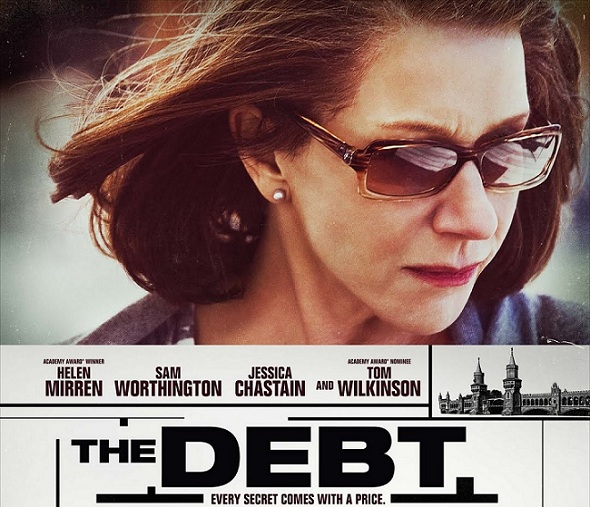
  • Review: “The Debt”
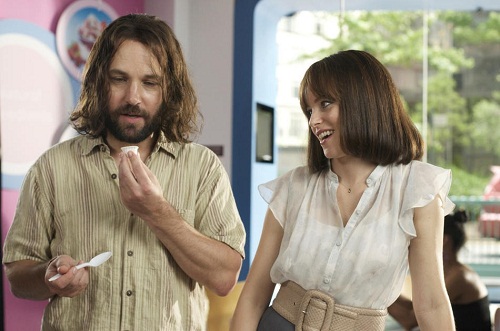
  • Review: “Our Idiot Brother”
  • Review: “The Help”
  • Review: “Fright Night”
  • Review: “Beginners”
  • Review: “Crazy Stupid Love”
  • Review: “Rise of the Planet of the Apes”

Colin Carman

~ Jane Austen Scholar & Culture Vulture

Colin Carman

Author Archives: colincarman

Review: “Drive”

17 Saturday Sep 2011

Posted by colincarman in Film Reviews

≈ 7 Comments

Tags

albert brooks, blue valentine, Brando, bronson, california, carey mulligan, christina hendricks, crazy stupid love, crime drama, DeNiro, drive, echo park, film noir, hollywood, los angeles, mad men, nicolas winding ref, oscar isaac, ron perlman, ryan cranston, ryan gosling, taxi driver, traffic, valhalla rising, vigilante

“Auto-matic for the People”

Film Review: “Drive” (2011)

Grade: A- (SEE IT)


REVENGE, THEY SAY, is a dish best served cold.  Even colder when served at midnight in the mean streets of Los Angeles, or so “Drive” from Danish director Nicolas Winding Ref (“Bronson,” “Valhalla Rising”) would have us believe.

After the film’s anonymous protagonist (played by Ryan Gosling) sees his friends victimized by ruthless gangsters (Albert Brooks and Ron Perlman), he swiftly avenges their deaths in the film’s final twenty minutes, a stunning finale reminiscent of a very obvious influence here: the vigilante bloodbath known as “Taxi Driver” (1976).  But Gosling, fresh from the one-two punch of last year’s “Blue Valentine” and his comic turn in “Crazy Stupid Love,” smartly eschews a recycling of DeNiro to breathe new life into a young, marble-mouthed Brando, an über-cool Hollywood stunt driver by day and criminal getaway driver at night.

Before the pink cursive credits roll – oh yes, Mr. Ref is a stylist and “Drive” is part music video, part urban nocturne (the best shots, in fact, of the City of Angels at night since Michael Mann’s “Collateral” of 2004) – the film’s opening demands that you fasten your seat belt as Gosling’s driver escapes the LAPD with two masked gunmen hiding in his backseat.  It’s not the high-speed car chase we’ve seen a thousand times before but a vehicular game of cat-and-mouse, a chess game on squealing rubber tires.

We get to know the driver’s softer side when, inside his Echo Park apartment building, he attracts his married mom of a neighbor, Irene (played by the always-restrained Carey Mulligan) and fills in for her  husband, who’s behind bars, and takes a special liking to Irene’s small son.  “What do you do?” Irene asks.  “I’m a driver,” Gosling replies.  “Like a limo driver?”  “No, like in the movies.”   There’s a brief period of paradise – the trio drives the city’s empty culverts, á la “Terminator 2” but slowly and in the sunshine – before Irene’s husband named Standard (Oscar Isaac) returns home.  That homecoming presages the fatal breakdown of virtually every relationship in the film: the driver’s bond with Bryan Cranston as a grease monkey known as Shannon, Standard’s with Mad Men’s Christina Hendricks as a double-dealing grifter, and Perlman’s with Brooks (playing against type as a diabolical ringleader).  When the driver doesn’t shake his hand, explaining “My hands are a little dirty,” Brooks shoots back: “So are mine.”

In keeping with the film noir of “Drive,” Ryan Gosling reveals what could be called the black leather interior of his complicated character.   It’s as sleek and stinging as the scorpion emblazoned on the back of his blood-stained jacket.  The pace of this little ultraviolent gem may not be fast and furious – at times, it’s closer to rush-hour traffic on the 101 – but “Drive” is sure to pick up more than a few passengers on its road to cult status.

Review: “Contagion”

13 Tuesday Sep 2011

Posted by colincarman in Film Reviews

≈ 1 Comment

Tags

blog, blogosphere, camus, CDC, cliff martinez, contagion, dickens, elliott gould, erin brovovich, fall movies, final destination, griffin kane, gwyneth paltrow, jude law, kate winslet, laurence fishburne, marion cotillard, mary shelley, matt damon, medicine, metaphor, oceans 11, steven soderbergh, the last man, the plague, thriller, WHO, WW II

“Cover Your Cough”

Film Review: “Contagion” (2011)

Grade: B (RENT IT)

“BLOGGING ISN’T WRITING. It’s graffiti with punctuation.”  This from Dr. Ian Sussman (played by Elliott Gould), an epidemiologist scrambling to find a vaccine for the pernicious pandemic known as MEV-1 in the new thriller, “Contagion.”

The blogosphere will certainly admire the fact that the object of Sussman’s invective – a San Francisco blogger named Alan (Jude Law) – is one of the lucky few completely immune to the plague.  Then again, Alan is a sleaze who capitalizes on the crisis by exploiting his readers’ panic  (Too bad I’d need a global epidemic to gain that kind of readership!)  In a Dickensian stroke, Alan’s last name is Krumwiede (pronounced “Crumb-Weedy”) and he’s as slimy as the infection himself.

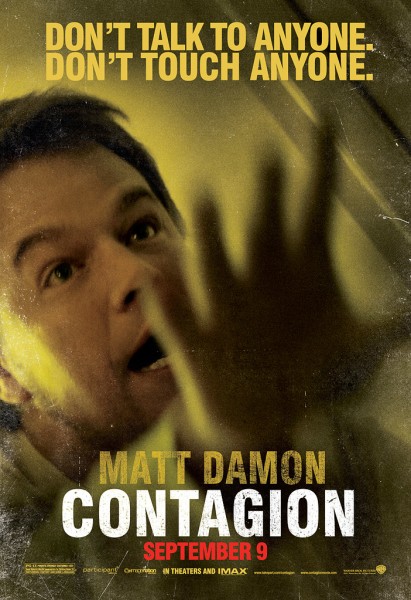
Before Krumwiede comes on the scene, however, society as we know it quickly unravels after business exec Beth Emhoff (Gwyneth Paltrow) returns from Hong Kong to her home in Minneapolis.  Husband Mitch (Matt Damon) is devastated when she and son Clark (Griffin Kane) quickly succumb to an illness as inexplicable as it is fatal.  It’s a cool and crestfallen performance from Damon, shot in the oceanic blues favored by director Steven Soderbergh (“Erin Brockovich,” “Oceans 11”).  Watch as his reaction hardens from disbelief to fury as an emergency room doc tells him both his wife and six-year-old son are dead.  The pathogen in “Contagion” doesn’t just infect; it ravages.  With its rapid incubation phase, and 2.5 million dead in just 26 days, MEV-1 makes SARS look like the sniffles.

To the rescue is a team of experts including Kate Winslet (as Dr. Erin Mears of the CDC), Laurence Fishburne (as Ellis Cheever), and the marvelous Marion Cotillard (as Leonora Orantes of the World Health Organization).  One of the numerous subplots involves Leonora’s abduction at the hands of an Asian family man who holds her hostage until his villagers are given the cure.  After a no-nonsense Winslet is shown an empty stadium for treating the sick, she replies: “Good.  Now give me three more just like it.”

Where “Contagion” succeeds in terms of pacing – composer Cliff Martinez provides an electronic score of blips and bleeps, which sounds like call-waiting on Mars – the film never transcends a purely base and biologic level.  The greatest explorations of contagion on page aren’t as modern as you might think.  Mary Shelley’s The Last Man may have been set in the future, but it was published back in 1826 while La Peste (or The Plague) of Albert Camus followed the Second World War in 1947.  What those two novels share is the alertness to contagion as something more than simple transmission.  Yes, a germy handshake can be a weapon, but it’s also a tie that binds.

However slick and satisfying, “Contagion” is more interested in building (then swiftly dissembling) the puzzle-like structure of a medical mystery than it is in the plague as some kind of meaningful metaphor for interconnectivity and a world flattened by travel and globalization.  “Contagion” will make you afraid, but it won’t make you think, and stripped of the idea that illness is always a metaphor, it metastasizes into some soulless installment of “Final Destination” where you end up waiting on the next character to die.

Poem: “11 Lines for September”

11 Sunday Sep 2011

Posted by colincarman in Poems and Plogs (Poem-Blogs)

≈ Leave a comment

Tags

anniversary, attacks, elegy, manhattan, new jersey, new york city, patriotism, rodin, september 11, ten years later, world trade center, WTC

(written one decade ago, dusted off here in memory of the fallen, including a classmate from NJ):

11 Lines for September


In Memory of Daniel Gallagher, North Tower

b. July 4, 1978 – d. September 11, 2001


Every tongue fell mute that morning

Four jets, an unholy quartet, aimed their noses

At a nation’s market, mansion and military

Poets on their fire escapes, trashmen on their hills

The recital halls and stadiums were mortuary still

A city that raced the sun to its every setting

Stopped.  But once the cameras regained their focus

Once candles cooled on every bench and bumper

Cabbies and curators, theologians and thieves – each and all agreed:

It will take more than fear, and fear’s fierce promoters,

To distract our common cause.


* * * * * * * * * * *

The Thinker


After the ash had settled over lower Manhattan

Bus stops flaked with photos of the missing

The outer boroughs grew uneasy in the shadow

Of a diminished and defeated looking skyline.

But there, in the still-warm ruins, a rescue team

Discovered the unscathed remains of a Rodin

His Thinker jutting fork-like from rock and wire

Still locked in a pose of private contemplation.

He lay upside down, separated from his stand

From the boardroom where he went largely ignored

From the janitor who, when dusting his head each evening,

Would talk to him as if he was an old friend.

He survived the heat and fury of the fall

The hour when the carpet seemed to drop away

And all the city’s homing pigeons circled above him

Searching in vain for their customary landmarks.

He suffered only the loss of his stature

And the disfigurement of a fist

Still the team hauled him from the rubble

And set him aside where he could stand

In cold remove from man’s distress.

(September 2001)


Tribute to Daniel:

http://www.voicesofseptember11.org/dev/memorial_content.php?idbio=451102069&idcontent=308664590

Review: “The Debt”

05 Monday Sep 2011

Posted by colincarman in Film Reviews

≈ 1 Comment

Tags

avatar, berlin, ciaran hinds, drama, eichmann, evil, germany, helen mirren, history, hitler, indiana jones, inglourious basterds, israel, jane goodman, jersusalem, jesper christensen, jessica chastain, matthew vaugn, mossad, nazi, peter straughan, revenge, sam worthington, suspense, tarantino, tel aviv, terminator salvation, the debt, the help, the last crusade, the marathon man, tom wilkinson, tree of life

“Schindler’s Fist”

Film Review: “The Debt” (2011)

Grade: B (RENT IT)

“Terribly and terrifyingly normal.”  That was Hannah Arendt’s memorable description, from 1963, after seeing Adolf Eichmann, one of the evil architects of the Holocaust and only Nazi to be executed on Israeli ground after the war, stand trial for crimes against humanity.  It was exactly Eichmann’s bourgeois normalness that terrified Arendt the most.  Even the most destructive of men, she realized, can look like, well, Joe the Plumber.

Every bit the Nazi monster, Eichmann was also a pencil-pusher and a bureaucrat, and as Arendt would argue, in her controversial “Report on the Banality of Evil” from Eichmann in Jerusalem, all the more dangerous because he himself could be pushed around.  In the end, he was a mere “organization man” whose unthinking compliance made the deportation and deaths of millions as easy as the flip of a switch.  “The trouble with Eichmann was precisely that so many were like him,” Arendt observed, “and that the many were neither perverted nor sadistic, that they were, and still are, terribly and terrifyingly normal.”

That banality of evil, as Arendt would famously phrase it, is what gives the many face-to-face confrontations between Mossad special agent, Rachel Singer, and Nazi monster, Dieter Vogel, their thrilling charge in John Madden’s “The Debt” (a reboot of a 2007 Israeli thriller adapted by Matthew Vaughn, Jane Godlman and Peter Straughan).  Their tense scenes together involve straight razors, needles, even speculums and they’ll make you want to look away.   The wicked Dr. Vogel (played by Jesper Christensen) is best (or worst) known as the sadistic Surgeon of Birkenau, and he’s been hiding in plain sight in an East Berlin gynecology practice since the fall of the Third Reich.  He has a pleasant looking wife, also his nurse, and he appears, on the surface, well, normal.   Incognito as Dr. Vogel’s timid patient, Rachel exchanges pleasant chitchat with the good doctor as she prepares, with the help of her two fellow agents, to forcibly apprehend the fugitive and bring him to justice.

The young Rachel is played by Jessica Chastain, surely 2011’s greatest revelation on screen.  She was ethereal as the virtually mute mother in Terrence Malick’s superb “The Tree of Life,” effervescent in “The Help,” and here, in “The Debt,” she’s every bit as forceful and effective as the third corner in a triangle of operatives consisting of Stephan (Marton Csokas) and David (Sam Worthington of “Avatar” and “Terminator Salvation”).  The film occupies several points on the same timeline all at once.   Juxtaposed with the kidnapping of Vogel in 1965 Berlin is modern-day Tel Aviv where Rachel, thirty years later, is now famous for shooting Vogel dead and making her people proud.

But did she?  Is her version of Vogel’s killing truthful, or could the Nazi doctor have fled and Rachel, and Stephan, and David’s account of events be a fabrication?   A terrific trio of actors plays the agents at middle-age (Helen Mirren as Rachel, Tom Wilkinson as Stephan and Ciaran Hinds as David).  They’re still busy trying to rewrite history, and since this reviewer is no spoiler, all I will say is that this triangle, young and old, has more than a few lies to protect.  What powers “The Debt” is the same Hitler-directed revenge fantasy that powered two modern-day classics: 1976’s “The Marathon Man” and Tarantino’s “Inglourious Basterds” of 2009.

Hanah Arendt and the banality of evil is surely a useful lens through which “The Debt” should be viewed.  More accessible perhaps is someone a bit closer to (cinematic) home, that is, Henry Walton “Indiana” Jones, Jr., PhD who, in his “Last Crusade” of 1989, has the last word when he says with a sigh: “Nazis.  I hate these guys.”

Review: “Our Idiot Brother”

01 Thursday Sep 2011

Posted by colincarman in Film Reviews

≈ 3 Comments

Tags

30 Rock, boulder, bum, comedy, crocs, dinner for shmucks, elizabeth banks, emily mortimer, family, film review, golden retriever, hippie, homewrecker, how do you know, lebowski, lisa kudrow, natalie portman, NBC, our idiot brother, poetry, pt anderson, punch drunk lover, purell, rashida jones, shirley knight, sisters, summer movie, the other woman, thespian, urkle, willie nelson, zooey deschanel

“Small in the Family”

Review: “Our Idiot Brother”

(for Christopher)

Grade: B (RENT IT)

IS HONESTY ALWAYS the best policy?

“Our Idiot Brother” answers that eternal question with a resounding YES though it stresses that truth is not without its casualties.  The engine of unflinching truth-telling is the film’s lovable and, yes, idiotic protagonist Ned Rockland (played by Paul Rudd in a Lebowski-like beard and hippie haircut).  When he walks in on his brother-in-law, Dylan (Steve Coogan), in the buff and cheating on his sister, he doesn’t beat the guy to a bloody pulp.  No, he sanitizes his hands with a squirt of Purell and goes about his merry way.  A more apt title would be “Our Naïve and Puerile Brother with No Conversational Filter,” but that wouldn’t exactly sell tickets now would it?

“Our Idiot Brother” is just the heartfelt comedy to break Rudd’s losing streak in a string of turkeys otherwise known as “Dinner for Shmucks” and “How Do You Know.”  As Ned, he brings a 90-minute smile to the face.  Watch as he joins Dylan, a smarmy filmmaker, on the set of a dance studio and, getting his plastic shoe wedged in the ballet bar, explains: “My Croc is stuck.”  Rather than playing the role with a meta-thespian’s wink to the audience, as if to say “How dumb is this guy?”, Rudd plays Ned with absolute earnestness and it’s the film’s recipe for un-self-conscious success.   See Ned bounce on a trampoline while sipping a juice box.  Hear Ned unsure of whether or not he has health insurance.  See Ned, working a farmers market at the film’s opening, give free fruit to children and accidentally sell pot to a uniformed policeman.   Oops.  The arrest means that Ned loses the farm – the organic farm – and sole custody of his golden retriever named Willie Nelson.  “Willie Nelson!” Ned exclaims as his pooch is packed into a copcar.  “It’s going to be okay Willie Nelson!”

Ned is the sort of lovable guy who, when angry, grumbles under his breath “Geez Louise!” and when really angry, exclaims: “Oh wow, I mean, wow!”  Rudd shows all the bygone tenderness required of him as Jennifer Aniston’s gay best friend in “The Object of My Affection” (1998) but not required of him in any of the Apatow raunch as of late (“Anchorman,” “The 40 Year Old Virgin,” et al).  Without Rudd, the comedy’s center cannot hold.

This is not to disparage the three actresses who play Rudd’s cosmopolitan sisters: a predictably half-awake Zooey Deschanel as the indie bisexual Natalie, Elizabeth Banks as the journalist Miranda, and Emily Mortimer as the panicky Manhattan mama Liz.  (Mortimer and the laser-eyed Banks have both taken hilarious turns as Alec Baldwin’s girlfriend on the NBC sitcom “30 Rock.”)   And there a few more strong women to keep Ned afloat, including Rashida Jones as Natalie’s girlfriend in Urkle glasses, not to mention Ned’s Chardonnay-swilling mother (Shirley Knight) and hippie ex-girlfriend Janet (Kathryn Hahn).  Not since P.T. Anderson’s “Punch Drunk Love” (2002) have we seen such an idiot savant – or maybe it’s just plain idiot? – surrounded by so many screaming sisters.  Why are such mighty matriarchies so seldom seen on screen?

The sisters in “Our Idiot Brother,” however, are clichés rather than characters.  Dylan’s wife, Liz, is as uptight as she is uptown and, worried that her son won’t be accepted into an elite elementary school, is covering familiar ground; Lisa Kudrow already nailed this social type in the underrated “The Other Woman” (2009) with Natalie Portman as a sympathetic homewrecker.  And speaking of homewreckers, Ned is something of one himself, but his systematic destruction of his sisters’ domestic bliss is more accidental than malicious.  As anyone with an idiotic sibling might sigh, they know not what they do.

————————————————————————————-

Speaking of siblings, here’s a poem I wrote for my own idiot brother:

Give a Bum a Beer: A Drinking Rhyme

Give that guy a beer, said he

Lowering my window without me

Asking.

Give that bum a beer? I asked

Without a glass?  Into a flask? He’s

Coming.

Yeah, just toss that guy a can

Good beer is like a lending hand for

Drinking.

Our radio rang “People are strange”

The man said:  Can you spare some change? I’m

Roasting.

How ‘bout a beer? my brother said

Right on, he grinned.  Better drunk than fed when

Struggling.

Thanks for helping a brother out

Instead of blind-eyein’ and drivin’ about, you’re

Sharing.

–          Boulder, Summer 2011

Review: “The Help”

25 Thursday Aug 2011

Posted by colincarman in Film Reviews

≈ 1 Comment

Tags

1960s, alabama, allison janney, bryce dallas howard, comedy, crazy stupid love, don draper, drama, emma stone, injustice, jackson, jessica chastain, kathryn stockett, mad men, martin luther king, meryl streep, novel, octavia spencer, patriarchy, proof, race, racism, sissy spacek, straight A, summer movie, tate taylor, the help, the south, tree of life, viola davis, white

“Separate but Sequel?”

Movie Review: “The Help” (2011)

Grade: B+ (RENT IT)

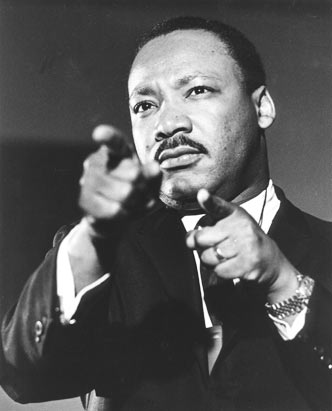
IN THE SPRING of 1963, Martin Luther King, Jr. was imprisoned for eight days in an Alabama jailhouse.  The crime?  Leading a peaceful protest against the institutionalized racism of the age otherwise known as segregation.  The result?  M.L.K’s masterwork “Letter from Birmingham Jail,” perhaps the second most important work of antiauthoritarian argumentation after that little-known piece of paper called “The Declaration of Independence.”  In a blend of aphorism and oratory, King writes of what he calls the “interrelatedness of all communities and states,” adding: “Injustice anywhere is a threat to justice everywhere.”  The part, in other words, infects the whole.

The part in Tate Taylor’s “The Help” is the kitchen or the nursery in any ordinary Southern house and the whole is the deeply racist and paranoid world outside.  The uniformed maids working long hours in those humid, white-owned spaces have grown bitter and resentful after generations of hardship.  Known euphemistically as “the help,” they’ve got a few stories to tell about the white women they’re forced to “Yes Ma’am” all damn day long.  All they need is a person in power to get the word out, to publicize their notes from the underground.  They get more than they bargain for when a brash white woman comes home, proclaiming: “I’d like to write something from the view of the help.”

Based on the much-anticipated film adaptation of Kathryn Stockett’s 2009 best-selling novel, “The Help,” director Tate Taylor preserves Stockett’s sense that even the domestic sphere has something instructive to say about the world outside.  Set not in Birmingham but in Jackson, Mississippi in 1962, the narrative unfolds inside a hermetically-sealed world of upper-class white privilege, one in which dessert forks and serving from the left still matter.  There’s Hilly (played by Bryce Dallas Howard), a veritable slave-master in a beehive who believes wholeheartedly that black maids should use separate bathrooms from whites, and Allison Janney as the cowardly mother of the film’s white heroine, Skeeter (the starlet du jour Emma Stone of “Easy A” and “Crazy Stupid Love”).  It’s not just Skeeter’s name that sets her apart from the vapid dilettanti of Jackson high society but Skeeter’s freckles, corkscrew hair, her literary aspirations, and her little interest in marriage and men.  When Skeeter returns home as an Ole Miss alumnus with a new writing job, her mother corners her about her unconventionality, worried that she’s having “unnatural thoughts” about the same sex.  “I read there’s a cure,” blurts a worried Janney, even a “brew tea” to make her more like Hilly and herself.

But Skeeter sticks to her guns and to the marginalized black help of Jackson, namely Aibileen (the indomitable Viola Davis) and Minny (Octavia Spencer).  Davis earned a Best Supporting Actress Oscar nomination for just eight minutes’ worth of screen time with Meryl Streep in “Doubt” (2008).   She has a fascinating face – deep and protuberant eyes always on the verge of crying – and alongside Spencer’s Minny, she’s the emotional core of “The Help.”  The two provide Skeeter with first-person accounts of their humiliations.  One of Skeeter’s questions, which we hear twice, is even sadder the second time: “How does it feel to raise white children while your own children are being raised by someone else?”  Unsure, or perhaps afraid, to answer, Aibileen can only stare at the portrait of her dead son (the victim of a racial hate crime) on her kitchen wall.   When the testimonials of Aibileen and Minny grow into Skeeter’s book-length exposé of white establishment, the joke is mainly on Hilly.

The film’s pace and performances are equally fine.  It’s refreshing to see Bryce Dallas Howard drop the usual blankness of her expression and relish in the bitchy malevolence of her role.  Her senile mother, played by a cat-eyed Sissy Spacek, garners laughs since even she finds her daughter’s racist airs repugnant.  On the narrative sidelines, perhaps, is the character of Celia (played by Jessica Chastain, the ethereal mother-figure in “The Tree of Life”) who, like Skeeter, sees no value in separate bathrooms and dining areas and relies on Minny (who is fired by Hilly for insubordination) to teach her how to cook and play the perfect wife.  The fact that she can’t get pregnant and that she’s viewed as a harlot by the in-crowd has driven her slightly batty.

By empathizing with Celia’s predicament as well as Minny’s, “The Help” smartly rounds out the various levels of subjugation at work in 1960s culture.  What’s worrisome about America’s nostalgic return to that era – thanks to “Mad Men” and its various offspring – is that the age of the skinny tie was, in reality, an age of wide disparity.  For every Don Draper in a skyscraper there were a million more Aibileens and Minnies.  The ditsy Celia is as much a victim as they are since all these women, white or black, are relegated to social roles that simply don’t fit.  The main deficiency of “The Help” is that it doesn’t do enough with this parallel form of oppression.  Too eager to please, the film loves to watch Hilly fall flat on her face over and over again, but in this respect, it can’t see the forest for the trees.  “The Help” misses the fact that racism and patriarchy are overlapping forces, which means that even the most villainous women are sometimes victims.

Review: “Fright Night”

20 Saturday Aug 2011

Posted by colincarman in Film Reviews

≈ 3 Comments

Tags

alpha dog, anton yelchin, austin powers, bromance, christopher mintz plasse, colin farrell, craig gillespie, david tennant, dracula, edward scissorhands, fatal attraction, fright night, glenn close, horror, illusionist, imogen poots, las vegas, monsters, muriel's wedding, nosferatu, role models, russell brand, sexuality, summer blockbuster, terminator, tim burton, tom holland, toni collette, true blood, twilight, vampires

“Sucker Lunch”

GRADE: B (RENT IT)

GARLIC? CHECK. HOLY WATER? CHECK. Wooden stake?  Check.

The power to resist the black Irish wiles of actor Colin Farrell as the vampire-next-door?  Not so much.  Farrell is surprisingly well-suited to the role of Jerry, a seductive bloodsucker who, like the Las Vegas housing development in which he suddenly appears, drops out of the sky and into his neighbors’ necks.  As the film makes plain, Vegas is a regular Mecca for our fanged friends: it’s another City that doesn’t sleep and chockfull of transients.  The opening aerial shots of a colorless community of townhouses in the Nevada desert – think of the homogenous rows of homes in the Tim Burton classic “Edward Scissorhands” (1990) – immediately establishes a sense of vulnerability.  It’s only a matter of time before something dark and demonic turns this Pleasantville upside down.  Enter Colin Farrell stage-left, or is it stage-fright?

I’ve been thinking about Dracula’s eyebrows lately.  For an academic article I’m preparing on the hair of nineteenth-century literary monsters, I focused on this description from Bram Stoker’s genre-generating classic, Dracula (published on May 26, 1897):  “[Count Dracula’s] eyebrows were very massive, almost meeting over the nose, and with bushy hair that seemed to curl in its own profusion […] The general effect was one of extraordinary pallor.”  Farrell’s got the bloodless pallor and Groucho Marx brows to play the part perfectly.  He’s Nosferatu with a six-pack.

From northwestern Romania to Sin City, from the Count to an average-joe like Jerry whose sexy surface masks something truly sadistic underneath.  A bloodsucker with a quotidian name like Jerry is, of course, played for laughs in the teen-friendly “Fright Night,” but it’s Jerry’s kids (the kids of Hillcrest Bluffs, Nevada, that is) that make this horror-fest feel fresh and intermittently funny.  Principally, there’s Charley (played by Russian-born Anton Yelchin of “Terminator: Salvation” and “Alpha Dog”) who is pursuing a new friend group, and a new girlfriend named Amy (Imogen Poots), at his high school.  He’s finding his childhood friend Ed Lee (the perfectly cast Christopher Mintz-Plasse of “Role Models”) hard to shake, and like a gay teen version of Glenn Close in “Fatal Attraction,” he keeps showing up at inopportune times, threatening to expose his nerdy past if Charley won’t hunt vampires with him.  He seems to say: I won’t be ignored, Charley.

This is the endearing core of the script, and though Ed doesn’t last long (at least amongst the human realm), he is one half of a teenage bromance seldom seen on screen.  Ed’s sexuality may be an adolescent question mark, but when he succumbs to Jerry in a swimming pool, feebly holding a crucifix in the air as if that’s gonna save him, Farrell moves in, holds him in his arms, and says: “You were born for this.  It’s a gift.”  If you’re like me and can’t abide the “Twilight” series and its sentimentalization of virginity, try HBO’s hit series “True Blood” (now in its fourth season) on for size.  You’ll never look at vampire narratives, so ubiquitous these days, and not remember that vampires are thinly veiled metaphors for sexual otherness (gay, lesbian, trans, fill in the blank).  It unsurprising, then, that when Charley and Ed fight to the death later in “Fright Night,” Ed holds his former friend tight and says: “Is this good for you? I’m feeling pretty homo right about now.”

Every Hollywood cast should be so lucky as to have the amazing Toni Collette (as Charley’s mom, Jane) around for just-add-water credibility.  Sure, she went mainstream in “The Sixth Sense” after the camp classic, “Muriel’s Wedding” of 1994, but she returns to the undead themes that made her big back in 1999 and with winning results.  Charley and Amy stand back as she flirts unabashedly with Jerry (gardening in a Brando-esque tank top) and confesses “I’ve had man troubles.  I’m not getting suckered again.”   Another notable cast member is Scotsman David Tennant as a Midori-swilling Vegas illusionist named Peter Vincent.  His performance is an obvious satire of Russell Brand (aka Austin Powers 2.0) and it gives the movie some teeth.  Charley comes to Vincent for advice on how to kill vampires, saying “I know what you do is an illusion.”  Tennant replies: “By illusion, you mean bullshit.”  Pause.  “Fair enough.”

Based on the original 1985 film written by Tom Holland, the retooled “Fright Night” (directed by Craig Gillespie and re-written by Marti Noxon) will entertain you right up until its slightly limp last act.  The film peaks after a car chase with a terrified Charley, Jane, and Amy running from Jerry, but once Toni Collette is hospitalized, “Fright Night” flatlines.   It’s not Farrell’s fault, nor is it his numerous costars’.  The problem lies in the fact that, by 2011, we’ve seen it all before.  Vampires have never been more en vogue and that’s because, like the mafia (Hollywood’s other favorite preoccupation), they operate invisibly amongst us, recruiting and romping in blood.  By now, we hardly need to be told that what happens in Vegas decays in Vegas.

Review: “Beginners”

17 Wednesday Aug 2011

Posted by colincarman in Film Reviews

≈ 2 Comments

Tags

beginners, christopher plummer, closet, comedy, ewan mcgregor, family, freud, gay, goran visnjic, gospel, jack russell terrier, mary page keller, me and you and everyone we know, melanie laurent, miranda july, no one belongs here more than you, the future, the sound of music, thumbsucker, walter kirn

“In Bloom”

Movie Review: “Beginners”

Grade: A- (SEE IT)

IN THE BEGINNING was the Word, and the Word was with God, and God had a Son, and God said: “Son, I’m gay.”  This is the gospel according to Mike Mills’ new film, “Beginners,” inspired in part by the director’s own relationship with his father, Paul, who died of cancer in 2004 shortly after coming out of the closet.   Paul (or “Hal” as he’s known in Mills’ film) is played sensitively and memorably – Oscar voters take note! – by 81-year-old veteran actor Christopher Plummer.  That’s right, Christopher Plummer as in Captain Georg von Trapp in 1965’s “The Sound of Music” and pretty much every film since then.  What lends “Beginners” its charm is the smiling spryness Plummer brings to the role of a septuagenarian essentially reborn as the gay man he never got to be.  We see him, shirt unbuttoned, strolling a dance floor packed with younger men, and later, calling his son for some social cues.  “Oliver, they had some wonderfully loud music in the club tonight,” he informs him over the phone, “What kind of music is that?”  His son, in bed, replies reticently: “Probably house music.”  “Okay,” says Plummer, chuckling to himself as he writes this down in case he forgets, “House music.”

As Mills’ fictional stand-in, Oliver (played by Ewan McGregor) is a kind-hearted Los Angelino who inherits his father’s Jack Russell terrier named Arthur (played by Cosmo) after his dad dies at age 75.  Since the film is told nonchronologically, we’re sometimes given endings before beginnings, which keeps the memories of Oliver’s deceased parents alive and, well, amusing from start of finish.  In one flashback, a young Oliver is taken to an art museum by his eccentric mother Georgia (Mary Page Keller).  She’s asked to leave after imitating the geometric designs on display.  “What?” she asks her young son, “I’m not allowed to interact with the art?”  Now flash forward to the modern day where Oliver meets Anna (the ravishing Mélanie Laurent) at a costume party where Oliver, with Arthur in tow, is dressed as the good Viennese doctor, Sigmund Freud.  A mute Anna has laryngitis and communicates only through pen and paper.  Playing the analysand, she sprawls out on the sofa before him.  “I guess we should begin with your mother,” Oliver jokes.  A relationship soon blossoms to parallel the love story of Hal and his young boyfriend Andy (a shockingly plain Goran Visnjic in a pageboy haircut).

The first frame of “Beginners” features a white flower in full bloom followed closely by the grim imagery of death: Oliver cleaning out his father’s house in the Hollywood Hills, dragging garbage bags to the curb, and flushing his dad’s cancer meds down the drain.  There’s a love of whimsy and unpredictability in Mills’ “Beginners,” as well as in his 2005 adaptation of Walter Kirn’s coming-of-age story, “Thumbsucker.” Mills is probably better known, however, as Mister Miranda July (“Me and You and Everyone We Know” and the oddball short story collection, “No One Belongs Here More Than You”).  Director of “The Future,” July shares Mills’ love of social weirdness, and since we’re getting Freudian, Oliver’s mother sports a curly haircut uncannily similar to the real-life July’s.   

From the outset of “Beginners,” Hal’s Jack Russell is so preternaturally smart that he speaks in subtitles, a clever but gimmicky touch that kept the audience members around me giggling to no end.  Giving Arthur a tour of his apartment, Oliver sits him down, man-to-man, and tells him: “Look, it’s lonely out here, so you better learn how to talk with me.”  An alert-looking Arthur stares back, his subtitle reading: “While I understand up to 150 words – I don’t talk.”  What the bittersweet “Beginners” explores is that desire to talk, and to be heard, which seemingly spans age groups, generations, even species. 

Review: “Crazy Stupid Love”

08 Monday Aug 2011

Posted by colincarman in Film Reviews

≈ Leave a comment

Tags

blue valentine, bromance, comedy, crazy stupid love, ewan mcgregor, Glenn Ficarra, i love you philip morris, jim carrey, John Requa, julianne moore, movie review, romantic comedy, ryan gosling, smurfs, steve carell, the hangover

“Isn’t It Bromantic?”

Grade: B (RENT IT)

IN CASE YOU hadn’t heard, the feet are the windows to the soul.  At least, the opening shots of “Crazy Stupid Love,” in which we see various couples engaged in playful games of footsy under restaurant tables, suggest as much.  The credits come to a screeching halt with the first sight of Mr. and Mrs. Weaver’s feet which, removed from each other and planted firmly on the floor, say a lot about their moribund marriage.  Worse, Cal Weaver (played by Steve Carell) is decked out in suburban dad-wear – khaki pants and New Balance sneakers – and unbeknownst to him, his wife has slept with a coworker (Kevin Bacon).  Yes, the thrill is gone for Emily Weaver (played by Julianne Moore) though she’s not sure she wants the single life either.  When the two can’t decide on a dessert, Cal suggests they simultaneously blurt out exactly what it is they’re craving.  But Emily doesn’t exude baked Napoleon, as Cal might have hoped, but “I want a divorce.”  How a good-natured guy like Cal can rescue and restore his marriage becomes the premise which “Crazy Stupid Love” pursues with entertaining results.  This is another comic success from “Bad Santa” writer-director team Glenn Ficarra and John Requa who, in 2009, debuted with the underrated “I Love You Philip Morris,” the story of a gay conman (Jim Carrey) who only has eyes for Ewan McGregor.

After free-falling into newfound bachelorhood after twenty plus years of marriage, Cal lands in a posh nightclub packed with beautiful and available women.  He becomes something of a dreadful fixture in the bar, however, as he drinks too much and bores strangers with the details of his breakup.  Carell’s delivery is pitch-perfect as we watch an inebriated Cal talking (slurring) to himself: “You know what word isn’t used much any more? Cuckold!  I was cuckolded by my ex-wife!  She made a cuckold out of me.”  And just as Cal becomes a social car-wreck from which you can’t look away, Jacob (Ryan Gosling) steps in to remake this lonesome loser into the Casanova he knows Cal has hiding inside.  In his crisp collars and tailored suits, Jacob isn’t just a clothes horse but a sartorial stallion.  Gosling is also like licorice for the eyes and even Cal is seduced; the two develop a deep and enduring bromance.  When he meets Cal at a LA shopping mall, Jacob throws Cal’s sneakers over the balcony before shepherding him through a new-clothes shopping spree, assuring him that Emily will rue the day she ever left him.  This is the capitalistic ethos personified: the road to romance runs right through your wallet.

The banal title notwithstanding, “Crazy Stupid Love” will charm you in large part because of Carell’s anxious everyman antics and the smirking ease of Gosling’s performance.  It’s good to see the latter lightening his pallette after last year’s pathos-laden “Blue Valentine.” The script is also layered with charming though familiar subplots. The Weavers’ preadolescent son, Robbie (Jonah Bobo), for example, has made a religion out of his babysitter Jessica (Analeigh Tipton) who is too infatuated with her employer Cal to notice.  Coincidences multiply in “Crazy Stupid Love,” which is cleverly plotted by “Cars” screenwriter Dan Fogelman, but perhaps too much so in the film’s final moments.  Set at a backyard BBQ, the resolution feels like a sitcom where loose ends are tied together too tightly.  Still, in a summer cinemascape occupied by Smurfs and penguins, it’s refreshing to see a romantic comedy aimed at grown-ups as crazy and stupid as we may be.

For my “Bromance Flix and the State of Dudedom” (2010 Film Review of “The Hangover,” et al) see:

http://www.thefreelibrary.com/’Bromance’+Flix+and+the+State+of+Dudedom.-a0216644249

Review: “Rise of the Planet of the Apes”

06 Saturday Aug 2011

Posted by colincarman in Film Reviews

≈ 3 Comments

Tags

allen ginsberg, animals, frankenstein, james franco, john lithgow, mary shelley, other, patrick doyle, revolution, rise of the planet of the apes, rupert wyatt, san francisco, science fiction, summer blockbuster

“Orangutangulous!”

Movie Review: “Rise of the Planet of the Apes”

Grade: B+/A- (SEE IT)

THE FACT THAT star James Franco (“Howl,” “Milk”) is currently studying British Romantic literature at Yale University in pursuit of his PhD – what’s next? Anne Hathaway as college chancellor? – may help to explain his initial attraction to the script for “Rise of the Planet of the Apes” (2011), a  prequel to the “Planet of the Apes” franchise which will have you saying to yourself: Go monkey, go!   After all, it’s in Mary Shelley’s Frankenstein (1818), that Romantic caveat of a classic which more or less spawned the entire science-fiction genre, that Victor Frankenstein describes his laboratory as that “workshop of filthy creation.”  What gives “Rise of the Planet of the Apes” its chill (and genuine thrill) is that the pharma-medical lab at the film’s center is anything but filthy.  Instead, the scientific headquarters known as Gen-Sys look like a state-of-the-art facility: sleek and silvery countertops, Plexiglas cages in which primates pace and occasionally scream out, Franco (as Will Rodman) in an immaculately white lab coat.

The glossy exterior of Gen-Sys belies what goes on behind (sliding and keypad-operated) doors: primates are routinely tested and tortured in pursuit of a cure for Alzheimer’s.  The drug restores memory in humans and turns primates into Super-Simians.   Rodman’s own dad, Charles (played by a befuddled looking John Lithgow) is himself an Alzheimer’s sufferer and another guinea pig for his son’s trials.  Therein lies the film’s recipe for disaster: just as Will is boasting to Gen-Sys’s investors that he and boss (smooth operator David Oyelowo) have found the cure, an ape known as Bright Eyes busts out of its cage and through the window to a board meeting only to be shot dead by security.  Bright Eyes leaves behind a baby chimp whom Will smuggles out of the lab and names Caesar.

It’s a portentous name, Caesar, and until he finally realizes the dictatorial power of his moniker, we’re left waiting for Caesar to rise and rule a maligned race of apes just dying for a leader.   With the help of Will’s panacea for Alzheimer’s, which he steals from the kitchen fridge, Caesar crosses the Rubicon into San Francisco and starts a revolution.  Who knew the City by the Bay had an incompetently run monkey house sitting on its borders like a ticking time bomb, and that silverback apes, looking for spears to throw at cop cars, could pull parking meters out of sidewalks like they’re picking daisies? In a film really about the horrors of captivity, this George is more furious than curious.

Director Rupert Wyatt (“The Escapist”) maintains a breezy pace as Caesar’s insurrection gathers speed and force.  One notable scene is set on Will’s street where drivers and pedestrians alike stop, mouths agape, to see something amazing:  scores of monkeys swinging through the trees above in a gathering storm.  The standoff on the Golden Gate Bridge is truly something to behold; one would be hard-pressed to think of another confrontation on film between ape and mounted policeman (ape: 1; S.F.P.D.: 0).  Though “Rise of the Planet of the Apes” delivers the exploding helicopters and car chases we expect from a summer blockbuster, Wyatt also maintains a thoughtful plea for animal liberation.  Sympathy was central for the Romantics, especially Mary Shelley whose Creature in Frankenstein longs for someone to sympathize with his plight, and the traces of that creed are still visible in Caesar’s all-too-human cries for freedom and non-violence.

The most affecting revelation in Frankenstein is when Shelley’s monster, with his “dull yellow eye,” confesses to his crimes, saying: “I’m malicious because I’m miserable.”  His motivation all along was the simple, childlike desire to be loved and needed, but looking the way he does, humans only reacted with fear and horror.  This is more or less the point of Wyatt’s eco-positive parable, “Rise of the Planet of the Apes”: all monsters are man-made just as every futile attempt to contain the animal other via zoos and laboratories ultimately backfires.  So long as we continue to oppress all other species, the threat of their violent takeover will remain both a fear and a fantasy.

As a modern-day Frankenstein’s monster, Caesar wants to lead a bloodless revolution – he even stops his monkey underlings from killing humans indiscriminately – but it’s just not in the cards, especially in a Hollywood movie.  It’s telling that his only line in the movie is “No,” which he utters to the surprise of his inept jailers in the ape house.  If you’re listening, Patrick Doyle’s pulsing score will stay with you until you reach the parking lot, but it’s the final image of Caesar finally in his element, free (for now) in the treetops overlooking San Fran, that will enliven you long after.

For my review of Franco as poet Allen Ginsberg in “Howl,” see:

“A Movie Based On a Poem”

(Review of “Howl”) in the _G&LR_

http://www.glreview.com/article.php?articleid=316

← Older posts
Newer posts →

Unknown's avatar

Recent Posts

  • Review: “Monsters: The Lyle and Erik Menéndez Story” (Netflix; 2024)
  • Sign Posts!
  • What Killed Jane Austen?
  • Was Austen a Holy Roller?
  • 5 Objects of Vivid Interest

Enter your email address to subscribe to this blog and receive notifications of new posts by email.

Join 256 other subscribers

Top Posts & Pages

  • Colin Carman
  • Review: "Life of Pi"
  • Review: "Crazy Stupid Love"
  • Gone Girls!

Jane Austen

action alien alpha dog amanda seyfried animals anton yelchin blue valentine bradley cooper brad pitt bromance carey mulligan charlize theron chawton christina hendricks christopher plummer colin farrell comedy crazy stupid love crime daniel craig dickens dracula drama emma stone england ewan mcgregor family frankenstein freud gay george clooney hampshire hbo horror jack russell terrier Jane Austen jessica chastain john lithgow joseph gordon levitt jude law kurt cobain mad men madonna mansfield park mary shelley matthew mcconaughey michael fassbender naomi watts oscars paris paul rudd philip seymour hoffman poetry politics portsmouth pride and prejudice romantic romantic comedy ryan gosling science fiction september 11 sex shakespeare shelley steven soderbergh summer blockbuster the hangover the help the social network thriller tim burton true blood twilight vampires viola davis

Blog Stats

  • 56,132 hits
  • RSS - Posts
  • RSS - Comments

Colin Carman Twitter

Tweets by ColinCarman

Colin Carman

Colin Carman

Archives

  • January 2025
  • July 2019
  • May 2013
  • April 2013
  • March 2013
  • February 2013
  • January 2013
  • December 2012
  • November 2012
  • October 2012
  • September 2012
  • August 2012
  • July 2012
  • June 2012
  • May 2012
  • April 2012
  • March 2012
  • February 2012
  • January 2012
  • December 2011
  • November 2011
  • October 2011
  • September 2011
  • August 2011
  • July 2011

Blogroll

  • Cinema Train
  • Dan the Man's Movie Reviews
  • Fogs' Movie Reviews

Category Cloud

Film Reviews Jane Austen Poems and Plogs (Poem-Blogs) Uncategorized

Blog at WordPress.com.

  • Subscribe Subscribed
    • Colin Carman
    • Join 171 other subscribers
    • Already have a WordPress.com account? Log in now.
    • Colin Carman
    • Subscribe Subscribed
    • Sign up
    • Log in
    • Report this content
    • View site in Reader
    • Manage subscriptions
    • Collapse this bar
 

Loading Comments...