• Review: “The Great Gatsby”
  • Review: “Mud”
  • Review: “The Place Beyond the Pines”
  • Review: “Ginger & Rosa”
  • Review: “Stoker”
  • Review: “Side Effects”
  • Review: “Mama”
  • Review: “Zero Dark Thirty”
  • Review: “Gangster Squad”
  • Review: “Les Misérables”
  • Review: “This Is 40”
  • Review: “Any Day Now”
  • Review: “Anna Karenina”
  • Review: “Silver Linings Playbook”
  • Review: “Hitchcock”
  • Review: “Lincoln”
  • Review: “Life of Pi”
  • Review: “Flight”
  • Review: “Skyfall”
  • Review: “Argo”
  • Review: “The Perks of Being a Wallflower”
  • Review: “Looper”
  • Reviews: “Arbitrage” and “The Master”
  • Review: “The Words”
  • Review: “Celeste and Jesse Forever”
  • Review: “Lawless”
  • Review: “The Campaign”
  • Review: “Total Recall”
  • Review: “To Rome with Love”
  • Review: “The Dark Knight Rises”
  • Review: “Moonrise Kingdom”
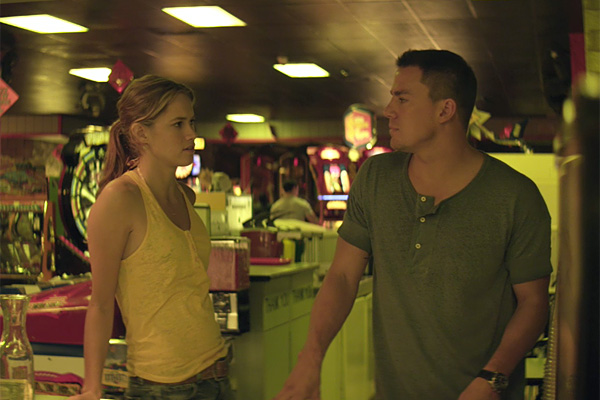
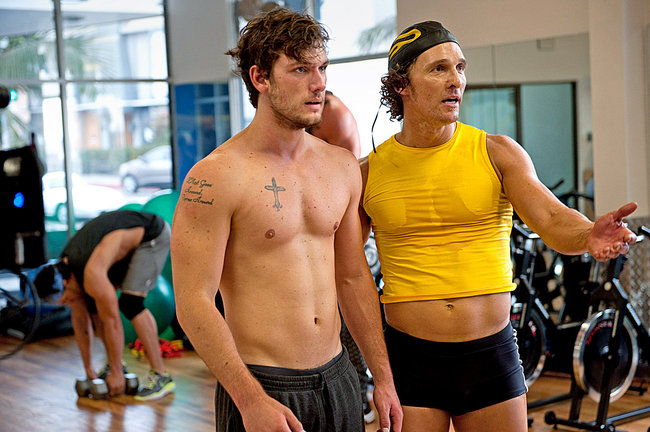
  • Review: “Magic Mike”
  • Review: “The Amazing Spider-Man”
  • Review: “Brave”
  • Review: “Abraham Lincoln: Vampire Hunter”
  • Review: “Prometheus”
  • Review: “Snow White and the Huntsman”
  • Review: “Bernie”
  • Review: “The Dictator”
  • Review: “The Raven”
  • Reviews: “Salmon Fishing in the Yemen” and “Jiro Dreams of Sushi”
  • Review: “Chimpanzee”
  • Review: “The Cabin in the Woods”
  • Review: “American Reunion”
  • Review: “Detachment”
  • Review: “The Hunger Games”
  • Review: “Casablanca” (In Re-Release; 1 Night Only)
  • Review: “Silent House”
  • Review: “Wanderlust”
  • Review: “This Means War”
  • Review: “Safe House”
  • Review: “The Woman In Black”
  • Review: “The Grey”
  • Review: “Extremely Loud & Incredibly Close”
  • Review: “Contraband”
  • Review: “Shame” and “Young Adult”
  • Review: “War Horse”
  • Review: “The Girl with the Dragon Tattoo”
  • Review: “Like Crazy”
  • Review: “Hugo”
  • Review: “The Descendants”
  • Review: “My Week with Marilyn”
  • Review: “J. Edgar”
  • Review: “In Time”
  • Review: “Take Shelter”
  • Review: “The Thing”
  • Review: “The Ides of March”
  • Review: “Dream House”
  • Review: “50/50”
  • Review: “Moneyball”
  • Review: “Abduction”
  • Review: “Drive”
  • Review: “Contagion”
  • Review: “The Debt”
  • Review: “Our Idiot Brother”
  • Review: “The Help”
  • Review: “Fright Night”
  • Review: “Beginners”
  • Review: “Crazy Stupid Love”
  • Review: “Rise of the Planet of the Apes”

Colin Carman

~ Jane Austen Scholar & Culture Vulture

Colin Carman

Author Archives: colincarman

Review: “Lawless”

30 Thursday Aug 2012

Posted by colincarman in Film Reviews

≈ 15 Comments

Tags

benoit delhomme, bootlegging, chicago, dane dehaan, gary oldman, guy pearce, jason clarke, jessica chastain, lawless, lucinda williams, mia wasikowka, prohibition, shia labeouf, tom hardy

“Flawless?”

Grade: C+/B- (RENT IT)

A FAMILY THAT bootlegs together stays together, right?  At least that was the motto of the Bondurant brothers, a feisty frat servin’ up moonshine in Franklin County, Virginia, and the centerpiece of John Hillcoat’s new crime drama “Lawless.”  Benoit Delhomme’s camerawork, pitched to a dusty brown, and the twang of Lucinda Williams, effectively transport us to those dusty days of the Depression.  The year is 1931 and the major players are the hard-bitten Forrest (Tom Hardy), war veteran Howard (Jason Clarke) and baby brother Jack (a beefed-up Shia LaBeouf).  With the help of Cricket, their disabled friend played by Dane DeHaan, the Bondurants operate a successful watering hole in the back hills of Apalachia.

Jack has his eye on Bertha (Mia Wasikowska), a preacher’s daughter just dying for a ride in his flashy convertible and the intoxications of Jack’s outlaw image.  The spectacular but sidelined Jessica Chastain (“The Help,” “Take Shelter”) plays Maggie “Red” Beauford, a former dancer turned barmaid who helps the brothers sling their white lightning.   They all maintain amicable connections with the authorities of Franklin who look the other way while taking a few sips themselves.

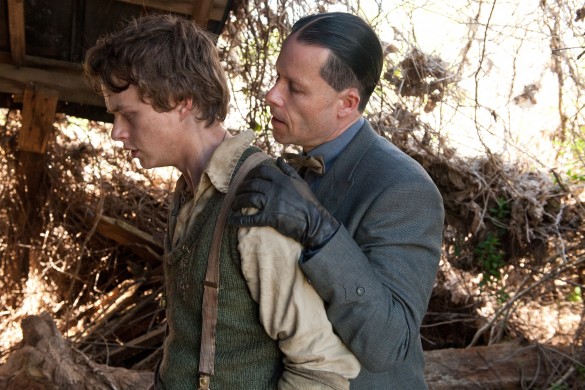
That is until Chicago lawman Charlie Rakes (an eyebrow-less Guy Pearce) arrives on the scene to demolish the boys’ American pastoral and false sense of invincibility.  Who kicks a man when he’s down?  Special Deputy Rakes does and viciously so.  The locals murmur that Rakes wears perfume and as he gores Jack across his own backyard, he worries that he’ll bloody his crisp pinstripe suit and swimming cap of pomaded hair.  Jack recovers, tensions mount, and during a first date gone terribly wrong, Bertha happily trades in her head scarf and church-going clothes for the yellow, strawberry-patterned dress Jack has brought her.  All around them, meanwhile, Rakes and his corrupt cronies are bearing down.

The consummate charmer, LaBeouf is known for his effortless chemistry with female costars and though he (and costar Hardy) are in desperate need of dialect coaching, “Lawless” broadens both actors’ likability.  More so than the chirpy LaBeouf, Hardy croaks his lines as he did as the dog-muzzled Bane in “The Dark Knight Rises.”  His dialect coach had to have been a bullfrog with a double tracheotomy.  More problematic than the performances, the script is from Australian rocker Nick Cave, known for his violently balladry, and based on “The Wettest County in the World” by the Bondurant brothers’ descendant, Matt Bondurant.

“Lawless” is a scrambled egg of a script.  One particular sequence, which move from Forrest’s throat being cut in the dirt, an offscreen sexual assault on Maggie, to the aftermath of both these horrors, is as disjointed as the surrounding scenes.  Gary Oldman, as Floyd Banner, even shows his villainish face, but he remains, puzzlingly so, on the margins of the Cave’s plotline.  Pearce’s Rakes is more than enough villain to go around, but the role written for him is a despicable cliché: a sadistic fop who, aside from hating to be called out for his effeminacy, has no real motivation.  You half expect him to victimize Cricket in other ways when he finally gets his manicured hands on him in the woods, and the punishment he has coming to him by the vengeful Bondurants, is both predictable and lacking in dramatic purpose.   The bloody fate that Deputy Rakes faces should have been staged in a more intimate fashion with dialogue rather than just bullets exchanged.
Thus “Lawless” ends with another familiar feeling:  Chicago, it’s a hell of a town.

Review: “The Campaign”

12 Sunday Aug 2012

Posted by colincarman in Film Reviews

≈ 2 Comments

Tags

adam mckay, comedy, dan aykroyd, grant goodman, jason sudeikis, jay roach, john lithgow, kya haywood, politics, sarah baker, the campaign, will ferrell, zack galifianakis

“Attack Lads”

Grade: B (RENT IT)

THE PHRASE “DIRTY POLITICS” acquires a new meaning in the amusing but ultimately frivolous “The Campaign,” directed by Jay Roach (“Meet the Parents”) based on a story by Adam McKay (“Anchorman,” “Talladega Nights”).  The film is a veritable raunch-o-rama that makes strange bedfellows of the already strange Zack Galifianakis and Will Ferrell.  No one will be surprised to learn that they have great comedic chemistry together though the script is cynical and ultimately too silly to really leave a black-and-blue.

As political opponents Marty Huggins and Cam Brady, respectively, the pair square off as congressional candidates in North Carolina and along the way, poke fun at the emptiness of political rhetoric in America today – Brady runs on the platform “America, Jesus, Freedom” but confesses off-stage that he doesn’t believe it much less know what it means – while satirizing the hypocrisies of campaigning and the deep pockets that make it all possible.  Pulling the strings, and downing brandy after brandy, are the film’s villains, John Lithgow and Dan Aykroyd, who, as Glenn and Wade Motch, mirror the real-life Koch brothers, the Tea-partying billionaires who abominate President Obama.  There’s also Dylan McDermott as the Motch’s errand boy and, in Brady’s bunch, Jason Sudeikis, as a campaign strategist.

The problem is that “The Campaign” doesn’t exactly rise – or is it sink? – to the level of great satire; its best bits involve what you have likely already seen in the previews (Ferrell taking an accidental swing at a baby on the campaign trail) and Sudeikis coaching his boss through a recitation of the Lord’s Prayer, which Ferrell botches badly but with brilliance.  A crazy-eyed Ferrell is little more than a haircut here and the Bush impersonation he does so well distracts.

As Huggins, the great Galifianakis gives us another of his effeminate manchild personae – he does essentially the same shtick in the road-trip comedy “Due Date” – that makes you wonder if he is parodying gay men for cheap laughs or, more subversively, playing it “straight” to ultimately undo masculine gender norms.  [New York Times film critic A.O. Scott raises the question in his review, asserting: “Marty is squeaky-voiced, easily flustered and just a wife (Sarah Baker) and two sons (Grant Goodman and Kya Haywood) away from being an egregious gay stereotype” (8/10/12).]   You half expect his macho enemy, Cam Brady, to out Galifianakis’ character and though that doesn’t happen, it is hard to know what Galifianakis wished to achieve with this queer performance and whether he is sending a knowing wink-wink to the audience.  The joke could be that the American mainstream demands a put-on masculinity.  “The Hangover” remains the apotheosis of man-cinema and yet no one talks about how the character of Alan deviates from the hetero-dullness of the typical buddy film.  The rest is simple: Galifianakis is the most dynamic comic actor of our time with the hardest working facial hair in show business.

If not for him, however, and Sarah Baker as his bewildered wife, “The Campaign” might even further lose the race.  It could have been a contender – and it packs in the laughs, for sure – but winds up as something of a minority leader.

Review: “Total Recall”

06 Monday Aug 2012

Posted by colincarman in Film Reviews

≈ 21 Comments

Tags

action, arnold schwarzeneggar, bryan cranston, colin farrell, dystopia, jessica biel, kate beckinsale, Kurt Wimmer, Mark Bomback, paul verhoeven, philip k. dick, robocop, science fiction, sharon stone, showgirls, total recall

“Where is my Mind?”

Grade: C (SKIP IT)

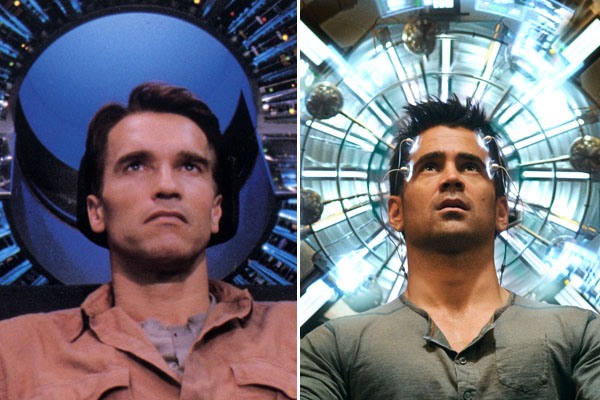
REMEMBER, BACK IN THE NINETIES, when Arnold Schwarzenegger was gladiatorial and not yet gubernatorial, and two words, “Sharon” and “Stone,” spelled the very apex of the filmic femme fatale?  They were all there in Paul Verhoeven’s “Total Recall,” based on a Philip K. Dick story “We Can Remember It for You Wholesale” and adapted by the writing team that gave us “Alien.”  The film grossed over a quarter-million dollars over the summer of 1990 and the sequel, in true sci-fi style, transmuted itself not into “Total Recall 2” but into Speilberg’s “Minority Report” starring Tom Cruise and Colin Farrell.

The latter actor now leads “Total Recall,” a remake not exactly worthy of the suffix “2.0” due to its repetitiveness and lack of inspiration. The premise remains a fascinating one and something of a Lockean nightmare: what if an authoritarian form of neuroscience could reduce its enemies into a tabula rasa with just the flip of a switch?  As everyman Doug Quaid, Farrell has only vague memories of being a secret agent in the ongoing war between Chancellor Cohaagen (Bryan “Breaking Bad” Cranston) and a resistance led by a wasted Bill Nighy.  Visiting a laboratory called Rekall, the scientist tells Quaid: “Tell us your fantasy and we’ll give you the memory.”  Outside the lab, a chemical attack has cleaved the earth into the Fall, a version of Great Britain, and an imperialized Australia known as the Colony.  All the Marxist animosities between workers and over-lords would appear to be in place, but are soon squandered in a film that clings to flying-car chases and endless sequences in which Farrell and sidekick Jessica Biel fall from rooftops.  Even more nightmarish is the idea that in the distant future, in a decimated London-like metropolis, “Phantom of the Opera” is still being advertised on double-decker buses.

Directed by Len Wiseman, from a script by Kurt Wimmer and Mark Bomback, this “Total Recall” is a gumbo of other, better, films:  Cohaagen’s synthetic drones look like the Storm Troopers of “Star Wars” and the Colony resembles the LA of “Blade Runner” (only wetter).   Wiseman should have wised up to the fact that the Verhoeven’s original was full of grotesque splendors: triple-breasted prostitutes, red-hot martian sands, and a human face that came apart like a Rubik’s cube.  This was Verhoeven after “Robocop” but before “Showgirls,” and he brought a campiness to the original sadly absent in the reboot.

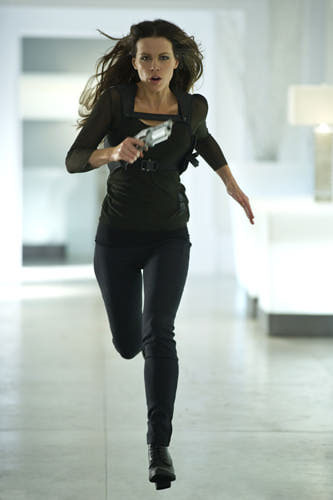
Then again, Kate Beckinsale (also Mrs. Wiseman) goes for the throat as Quaid’s wife, but if it’s Beckinsale karate-chopping her way through a film you’re after, the “Underworld” franchise will better whet your appetite.  Alongside Farrell and Biel (not so much a thespian yet but a very high pair of cheekbones), the cast is comprised of some of Hollywood’s blandest actors: poor Farrell is a hard worker, but he has an empty coolness that keeps him from truly vaulting himself into mega-stardom once and for all.  Here, the cast is upstaged by gadgetry, especially a glowing cell phone implanted in the palm.  Talk about keeping a phone on hand.

The best bit of dialogue transpires between him and Beckinsale with the query: “If I’m not me, then who am I?”  “How do I know?” she replies, “I just work here.”  Despite this, however, the sour irony of “Total Recall” is its total forgettability.

Review: “To Rome with Love”

29 Sunday Jul 2012

Posted by colincarman in Film Reviews

≈ 2 Comments

Tags

alec baldwin, aleesandra mastronardi, alesandro tiberi, alison pill, best films of 2012, comedy, fabio armiliato, greta gerwig, groundhog day, it's a wonderful life, jesse eisenberg, judy davis, match point, midnight in paris, owen wilson, penelope cruz, roberto bernigni, to rome with love, woody allen

“La Dolce Vita”

Grade: A- (SEE IT)

FOLLOWERS OF WOODY ALLEN’S long and important career have likely found themselves haunted by a tennis ball.  Central to his last great drama, “Match Point” (2005), the tennis ball is seen during the opening credits, being batted back and forth, with the film’s killer intoning: “People are afraid to face how great a part of life is dependent on luck.  It’s scary to think so much is out of one’s control.”  So much depends upon where that unpredictable little ball lands, and matched later by a wedding ring (a crucial bit of evidence which helps the film’s homicidal anti-hero to escape unpunished), Allen’s “Match Point” suggests that chance, rather than religious notions of prescribed order and continuity, governs the universe.

If “Match Point” milked the related roles of chance, luck, and contingency for murder and existential mayhem in “Match Point,” Allen’s new comedy, “To Rome with Love,” plays the selfsame themes for laughs.  If you sense the film’s big idea – that romance, too, is determined by the undeterminable – you’ll be grateful Allen has furthered developed his atheistic world-view but in gentler ways.  “To Rome with Love,” which follows on the heels of last year’s best film, “Midnight in Paris,” is comprised of at least thirteen major characters and four parallel narratives.  Even the combination of those disparate but related stories is driven by randomness.

First, there’s Ellen Page as Monica, a seductive actress who threatens to come between two American students studying in Rome (played by Jesse Eisenberg and Greta Gerwig).  (Actresses are duplicitous divas to be avoided in all of Allen’s films.)  Second, there’s Judy Davis and Woody Allen himself as tourists visiting their daughter and new Italian beau Michelangelo whose name Allen can’t pronounce correctly (Alison Pill, who played Zelda Fitzgerald in “Midnight in Paris” and Flavio Parenti, respectively).  Third, there’s Leopoldo, the Italian pencil-pusher who inexplicably becomes a celebrity overnight, and lastly, two more Italians (Alessandro Tiberi and Alessandra Mastronardi) also threatened by another woman (a prostitute played with panache by Penélope Cruz).  For once, someone has written a role for an Italian actor that doesn’t typecast them as the erotic tiger.  These two, not to mention the always excellent Eisenberg, don’t make the mistake Will Ferrell did in 2006’s “Melinda and Melinda” by channeling rather than simply impersonating Woody Allen’s famous persona.

Most, if not all, of these storylines revel in silliness.  Allen plays a former opera director who hears Michelangelo’s father singing in the shower and insists that he take stage despite the fact that Giancarlo (played by real-life operatic tenor Fabio Armiliato) will need an actual shower on stage to overcome stage-fright.  As Leopoldo, Roberto Benigni helps to blur the boundary between romantic comedy and satiric farce; he wakes up one day, à la “Groundhog Day,” to find himself suddenly in the spotlight where the most mundane details of his day, like whether he likes he bread toasted or not and where he scratches himself, attract national scrutiny.   As an older version of Jesse Eisenberg’s character, Alec Baldwin is something of a characterological question mark: is he the guardian angel Clarence from “It’s a Wonderful Life” or a Shakespearean spectre?  All the great films of 2012 thus far have been comedies – “Bernie,” “Moonrise Kingdom,” and now this – but I doubt you will spot a smarter meditation on happenstance this year.

As with “Midnight in Paris,” wherein the City of Lights is as much a character as the spellbound humans contained inside it, Rome itself is undeniably a player here.  At one point, Alessandra Mastronardi is as turned-around and lost as Owen Wilson’s Gil is in “Midnight,” and Darius Khondji’s splendid camera (also turned-around) pulls a 360 to show us the tawny exteriors of the Eternal City, always somewhere between ruins and romance.   Who else but Woody Allen keeps giving us that very modern feeling of being every bit the flaneur?  That being said, not all of “To Rome with Love” is perfect: just a little of Benigni clowning around in the street is more than enough and the film’s loose-ends take too long to wrap up.

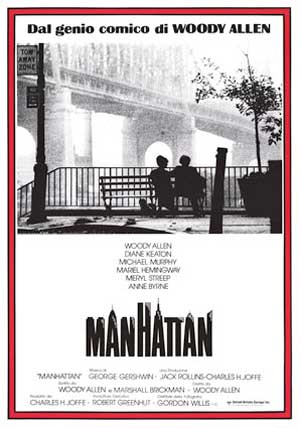
One third of that terrific trifecta – Spielberg, Scorsese – Woody Allen has been writing love-letters to his favorite cities for some time, and though “To Rome with Love,” may not rise to the unmatched “Manhattan” (1979) or even the London of “Match Point,” his latest is still a thinking person’s Roman holiday.

Review: “The Dark Knight Rises”

22 Sunday Jul 2012

Posted by colincarman in Film Reviews

≈ 31 Comments

Tags

anne hathaway, bane, batman, bruce wayne, catwoman, christian bale, christopher nolan, danny devito, gary oldman, gotham, harvey dent, marion cotillard, michael cane, michelle pfieffer, morgan freeman, the dark knight rises, the penguin, tim burton, wally pfister

“Bane Capital”

Grade: B+ (RENT IT)

in memory of the victims of the Century 16 tragedy in Aurora, Colorado

THE PROBLEM WITH “The Dark Knight Rises,” Christopher Nolan’s final chapter to the superb series he rebooted in 2005, is that its titular Knight fails to rise at all, or at least, it takes two full hours for the caped crusader to land on his feet.  The fact that Master Wayne (Christian Bale) spends most of the movie in bed is just one of the puzzles at the heart of this inert ending.  Never has an superhero film felt so atrophied by a listless and lifeless lead, all its action postponed until the final thirty minutes, which is too little, too late.

At a staggeringly long 164 minutes – you’ll feel every sluggish minute of the first hour – Nolan seems intent on draining, bat-like, the life out of Bruce Wayne and his alter-ego.  Why end the popular series this way?  Its starter, “Batman Begins,” was devoted to Wayne’s gradual evolution from a Gotham orphan into a Bhutanese ninja, but here, for some odd reason, Nolan appears intent on rolling back the clock to return us to those early days of self-doubt, followed by gradual self-actualization. “The Dark Knight Rises” should have gone out with a bang, with Batman/Bruce Wayne at the top of his powers.  Instead, we’re given a bat in need of a blood transfusion.

Cinematographer Wally Pfister dims the lights low to match a mirthless script by Nolan and his brother Jonathan. “The Dark Knight Rises” not only leaves a sour aftertaste, but the nostalgic wish to return to the campy antics of Tim Burton’s finer “Batman Returns,” now twenty years old.  Remember the waddle of DeVito’s Penguin and the cattiness of Michelle Pfieffer’s Selina Kyle?   You won’t find any of that fun here despite an ensemble of A-list actors: Michael Cane as the faithful Alfred, Gary Oldman as commissioner Gordon, Morgan Freeman as Bruce’s prop-man, the ravishing Marion Cotillard as Miranda Tate, a philanthropist and executive at Wayne Enterprises.  The two stand-outs are Joseph Gordon-Levitt as a do-gooder policeman, John Blake, and the only breath of fresh air in this gloomy spectacle: Anne Hathaway as cat-burglar Selina Kyle.  But why gesture, at the end, toward Blake’s future identity if Nolan plans to end it there?

It’s eight years after “The Dark Knight” and having taken the blame for the death of Harvey Dent, Batman has retired his rubber suit.  A new threat menaces Gotham, however, and demands that Batman once again take flight though, here, he is slow, very slow, to heed the call. As the arch-nemesis Bane, Tom Hardy wears a pressurized dog-muzzle and sounds, laughably, like a cross between the Swedish chef and Darth Vader. The film’s most exciting sequence, which may correct your slouching sleepily in your seat, is his terrorist attack on a football stadium, but even that spectacular assault is followed by Bane’s muted address to the terrified sports-goers.  I couldn’t help but identify with Bane’s audience at that moment: trapped, they appear more bewildered than enthralled.

Not for nothing, the constant threat that Bane poses to Gotham City is a network of bombs ready to detonate.  Whether you catch it in Imax or 35-millimeter, “The Dark Knight Rises,” a misnomer of epic proportions, is set on that shaky ground: it’s a bomb that never goes off.  More accurately, it’s the shell of a bomb that can’t find its fuse.

Review: “Moonrise Kingdom”

18 Wednesday Jul 2012

Posted by colincarman in Film Reviews

≈ 11 Comments

Tags

bill murray, bruce willis, comedy, david foster wallace, ed norton, frances mcdormand, jared gilman, jason sschwartzman, kara hayward, moonrise kingdom, roman coppola, tilda swinton, wes anderson

“Over the Moon”

Grade: A- (SEE IT)

“FICTION IS ABOUT what it means to be a ******* human being,” said the late, great David Foster Wallace.  I have censored the post-postmodern author of Infinite Jest and A Supposedly Fun Thing I’ll Never Do Again only because Wes Anderson’s newest opus, “Moonrise Kingdom,” not only delivers on Wallace’s challenge to all contemporary ironists to rise about their sometimes stilted aesthetic and to show some heart, but because, at Camp Ivanhoe, the summer scout camp setting of Anderson’s adolescent romance, cursing is forbidden.

So, too, is running away from home (and camp), the double infraction of the comedy’s twelve-year-old couple, Sam (Jared Gilman) and Suzy (Kara Hayward).  She’s a little runaway, carrying a suitcase of obscure books and a pair of scissors for lefties.  Remember, however, that “Moonrise Kingdom” is a Wes Anderson movie, which means that the couple beats to their own drum and moves at the pace of molasses. Think of Shakespeare’s star-cross’d lovers after the pair had given blood and/or ingested a large-animal tranquillizer.

Sam and Suzy’s escape throws Khaki Scouts’ leader, Scout Master Ward (Edward Norton) into his bloodhound mode and hot on the young couple’s trail, he enlists the support of Suzy’s parents (Andersonians Frances McDormand and Bill Murray).  Yet “Moonrise” follows a higher law: Walk, Don’t Run!  There’s no real hurry in Anderson’s world: Scout Ward pauses to smoke, sip scotch in his plaid, zippered tent and record his reflections.  Co-written with Roman Coppola, “Moonrise Kingdom” excels because it delights in the fascinations of childhood and the complexities of adulthood in equal measure.  Enter Bruce Willis as Captain Sharp, whom Suzy’s mother has been seeing extramaritally, and as much as Suzy fights her mother, we can’t help but notice the major way in which she becomes her by the film’s end.

At one point, a bespectacled Sam (replete with Scout badges and coonskin hat) exclaims, while fishing with Suzy: “Fish on hook!  Reel him in slowly!”  That instruction could serve as an apt metaphor for Anderson’s method, more self-satisfied than eager-to-please. A storybook-like plot and excellent ensemble cast (including Tilda Swinton and Jascon Schwartzman) reel the viewer in and in and in.  Again, Anderson doesn’t like to be rushed.  The reason why “Moonrise Kingdom” succeeds whereas his most dissatisfying deadpans such as “The Darjeeling Limited” and worse, “The Life Aquatic with Steven Zissou,” did not, is that adulthood is shaky ground for Anderson; his adult characters come across as precocious children whereas his children are more like puerile adults.  As paradoxical as it may seem, “Moonrise” is a fully mature work about immaturity.  Who else but this auteur could give us an over-stylized scene in which Sam’s foster father’s yellow shirt matches a yellow fan, a yellow refrigerator and a yellow rotary phone, and exchanges like this one, concerning the death of a dog named Snoopy:  “Was he a good dog?” Suzy asks of Sam to which he replies: “Who’s to say but he didn’t deserve to die.”

Meanwhile, it’s safe to say that “Moonrise Kingdom,” Anderson’s best film since “The Royal Tenenbaums” a decade ago, is the most uncampy fun you’ll have at the cinema this summer.  Walk, don’t run.

Review: “The Amazing Spider-Man”

05 Thursday Jul 2012

Posted by colincarman in Film Reviews

≈ 18 Comments

Tags

alfred molina, andrew garfield, batman, campbell scott, christopher nolan, embeth davidtz, emma stone, kirsten dunst, marc webb, martin sheen, peter parker, philip seymour hoffman, sally field, sam raimi, spider-man 2, spiderman, stan lee, steve ditko, superhero, the amazing spider-man, the dark knight rises, tobey maguire

“Arachnophobia”
Grade: C+ (SKIP IT)

THE BOY WITH a serious case of sticky fingers returns to the summer blockbuster scene with something between a bang and a whimper.  Ten years have passed since Sam Raimi’s stellar start to the “Spider-Man” trilogy, and just five since “Spider-Man 3” bombed out the franchise and Toby Maguire hung up his blue-and-red tights 2.5 billion dollars later. Peter Parker by day and Spidey by night, Andrew Garfield is now in the title role with Emma Stone (“The Help”) as girlfriend Gwen Stacy.  These fine young actors keep director Marc [“(500) Day of Summer”] Webb’s take from being two-hours-of-bummer.  (Last month, I saw a truly amazing Garfield hold his ground in the face of Philip Seymour Hoffman’s Willy Loman in a Tony-nominated role on Broadway.)

Nevertheless, since the arachnid is best known for its eight appendages, here are eight reasons that “The Amazing Spider-Man,” which doesn’t quite stick to its title, is a dead bug:

8.  At a longish 136 minutes, you’ll want an escape-hatch.  Oh what a lengthy web they weave.

7.  The plot’s contrivances pile up high and fast.  It isn’t enough that love interest Gwen Stacy is an intern in the very bioengineering lab (Oscorp) run by Dr. Curt Connors (“Rhys Ifans of “Notting Hill”), Peter’s departed father’s partner in biology.  Small world!  Oh no, Gwen Stacy’s father is also a Police Captain in pursuit of Peter, making the family dinner to which Spidey in plainclothes is invited awkward indeed.  That’s not so much a tangled web but an improbable one even by comic book standards.

6.  Total Recall.  The lady selling popcorn at the concessions stand said it all when, discussing “The Amazing Spider-Man” with me afterwards, said: “It’s just about new faces.”  Indeed, there is very little new or freshly inspired in this fourth  filmic take on the Marvel classic imagined by comic book artists Stan Lee and Steve Ditko back in 1962.  Eight long years elapsed between “Batman & Robin” and Christopher Nolan’s 2005 reboot; in the case of Spider-Man, we’ve experienced just five spider-less years since the negligible “Spider-Man 3.”  Too soon?

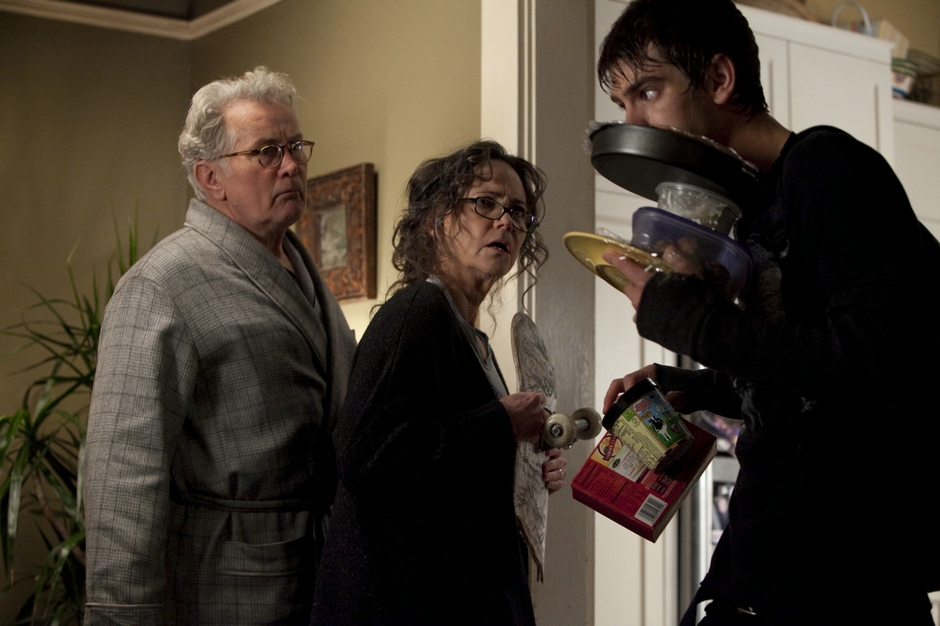
5.  Sally Field Never Leaves the Kitchen.  Peter Parker is the abandoned son of Richard and Mary Parker (Campbell Scott and Embeth Davidtz) left with his Uncle Ben and Aunt May (Martin Sheen and Sally Field).  The gender parity in this film is a throwback.  Not only does Gwen garner laughs rather than respect when she throws a lab-coat over her mini-skirt and knee-highs but the only other female figure in the film, Aunt May, surpasses the status of homebody: she’s a shut-in who offers only meatloaf and weak words of advice.

4.  Predictability.  After 30 minutes, you may be wondering who the villain will be and hiding in plain sight, herpetologist Dr. Curt Connors is a contender. The lizard nemesis here is a cross between the Hulk and Godzilla lacking the fire and muscle of either.

3.  Paging Dr. Ock!  The lack of real action in the film’s first hour left me thinking of Dr. Otto Gunther Octavius, that is, Doctor Octopus, so brilliantly embodied by Alfred Molina in “Spider-Man 2” (2004) with those mechanized tentacles that sent taxi-cabs crashing through coffee shop windows.  Importantly, it was Dr. Octavius’s grief over his dead wife that drove his rage, and in “The Amazing Spider-Man,” there is a total lack of pathos.  The villain in this instance is cartoonish.

2. Andrew Garfield’s pompadour.  As Parker and Mary Jane, Maguire and Kirsten Dunst had just the geeky vulnerability, not to mention working-class backgrounds, to fit the bill.  Here, Garfield and Stone are just too, well, pretty.  Mary Jane was the girl-next-door, literally behind the clotheslines strewn with Uncle Ben and Aunt May’s laundry, whereas Gwen Stacy…well, didn’t I already mention her costuming?  Part of Peter Parker’s appeal – say that seven times! – is that he’s a superhero by night but a lowly super-zero by day, and there’s no way Garfield could ever look the part.  He’s the lovechild of James Dean and a  No. 2 pencil.

1.   There’s a mightier superhero to anticipate this summer and that’s the bat-suited one in Christopher Nolan’s third and final installment to his noir series, “The Dark Knight Rises” (July 20).   What Nolan has done there – aided greatly, of course, by the fabulous horrors of Christian Bale and the late Heath Ledger – is retool the familiarities of the DC Comics series and give us something dark indeed.  It is not for nothing that twice in “The Amazing Spider-Man” you hear ol’ spidey say, after a fight: “You should see the other guy.”  Bring him on.

Review: “Magic Mike”

03 Tuesday Jul 2012

Posted by colincarman in Film Reviews

≈ 8 Comments

Tags

alex pettyfer, channing tatum, cody horn, comedy, florida, matthew mcconaughey, sasha grey, steven soderbergh, stripper

“Showguys”

Grade: A-/B+ (RENT IT)

CHANNING TATUM’S NIPPLES appear on screen a split-second before the rest of his body as he slides from a crumpled bed in which not one but two ladies lay felled from the night before.  These are the first indications that Steven Soderbergh’s new film “Magic Mike” is immersed in the body electric.  How could it not?  The narrative centers around an ambitious male stripper in Tampa, Florida who takes a college dropout named Adam (Alex Pettyfer) under his wing and onto the catwalk.  (Tatum was born to play this role, literally: penned by his production partner Reid Carolin, the dramedy is inspired by the actor’s own experience as a stripper in the Sunshine State.  Since that time, Tatum has been busy making tepid movies like “The Eagle” and “The Vow,” but here, he holds his own with newfound, leading-man likability.)

The real revelation of “Magic Mike” isn’t Tatum, however, nor is it Pettyfer, or even a repitilian Matthew McConaughey as club-owner Dallas, but newcomer Cody Horn as Adam’s sister, Brooke, who provides her brother with a sofa to sleep on while he learns the ropes at Club Xquisite.  “I don’t judge him, I love him,” she tells Mike.  Horn brings some much-needed sarcasm and gravitas to “Magic Mike,” which is skin-deep in terms of character and plotting.  Anyone familiar with the best (and worst) of hooker-with-a-heart-of-gold tales like “Showgirls” and “Breakfast at Tiffany’s” (not to mention “Klute,” “Boogie Nights,” and “Detachment”) will know that Adam will have to get knocked down before he gets up again.  There is a sweetness to Pettyfer’s naivete, especially when, wide-eyed, he remarks to Mike after a wild night out: “I think we should be best friends.”

The banal title notwithstanding, “Magic Mike” is elevated by Soderbergh’s Midas touch; in keeping with “Contagion,” the film is lit in tawny, almost sepia, colors except for when the dancers at Xquisite are gyrating in tear-away chaps and thongs.  Still, from the director of “Sex Lies and Videotape,” “Magic Mike” is surprisingly chaste; it could be the first unsexy movie about male dancers and the libidinal ladies they drive wild.  Amongst those admirers is adult movie star Sasha Grey (no link provided!).  If only “Magic Mike” had gone the full monty and thought of Dirk Diggler as its sleazy muse.

Regardless, audiences don’t seem to mind much.  Otherwise known as “the stripper movie,” “Magic Mike” raked in 39.2 million dollars during its opening weekend, a record for an R-rated film, and it cost just seven million to make.  That’s an awful lot of singles.

Review: “Brave”

24 Sunday Jun 2012

Posted by colincarman in Film Reviews

≈ 14 Comments

Tags

billy connolly, brave, brenda chapman, emma thompson, how to train your dragon, kelly macdonald, la luna, mark andrews, pixar

“How to Train Your Princess”

Grade: B+ (RENT IT)

THE PEDIGREE THAT is Pixar Animation Studios has never featured a female in a lead role.  Until now.  With its ginger-haired Merida (voiced by Kelly MacDonald), the studio responsible for such wonders as “Up,” “Wall-E,” and “Finding Nemo,” has finally joined the twenty-first century and paradoxically turned to tenth-century Scotland to tell its quasi-feminist tale, “Brave.”   Merida’s head of hair, by the way, may alone be worth the price of admission; it’s a mess of red-orange curls and bouncingly blends with the natural world around her.  In a dazzling set of sequences, the young princess rides the highlands on the back of her faithful Clydesdale Angus and when frustrated with family life inside the castle walls, she escapes to a stable to vent about her buffoonish father and imperious queen of a mother. They’re the DunBrochs, a boisterous family led by uber-clansman King Fergus (Billy Connolly), a bit too similar to the Viking patriarch in “How to Train Your Dragon,” and wife Elinor (Emma Thompson), a bit too droll to make “Brave” truly spellbinding.

Behind-the-scenes at Pixar, a female at the helm may have rocked Pixar’s boat; much has been made of the fact that Brenda Chapman, who conceived of the original story, was replaced by Mark Andrews with whom she now only co-shares a directing credit.  That power-shift may be reflected in the somewhat mixed result: “Brave” had great potential – consider it the little feminist tale that could – but feels, perhaps like Chapman herself, hemmed in and restrained.  On one hand, Merida exerts her agency at an archery match and shows up all the boys eager for a betrothal.  “I am Merida, and I’ll be shooting for my own hand,” she declares, like an aspiring Katniss from “The Hunger Games.”  On the other, the dialogue written for her reeks of adolescent platitude and her sparring with ol’ mom sounds awfully quotidian for a film purportedly aiming for fantasy.  Her conflict with her mother is what drives her to an enchanted forest inhabited by a witch (Julie Walters) that offers her a life-altering spell.  As the witch, Julie Walters’ voice lights up the funniest scene in “Brave.” A close second is anytime Merida’s triplet brothers are spinning about like a trio of red-headed tornados.

Punctuality may be key to really enjoying “Brave”: the short film “La Luna” that precedes “Brave” is really over-the-moon.  What follows feels disappointingly closer to home.

Review: “Abraham Lincoln: Vampire Hunter”

23 Saturday Jun 2012

Posted by colincarman in Film Reviews

≈ 12 Comments

Tags

abraham lincoln, action, anthony mackie, bejamin walker, caleb deschanel, civil war, dominic cooper, erin wasson, horror, joshua fry speed, liam neeson, mary elizabeth winstead, rufus sewell, seth grahame-smith, timur bekmambetov, true blood, vampire hunter, vampires


“The Exsanguination Proclamation”

Grade: D (SKIP IT)

WHAT A PITY that “Abraham Lincoln: Vampire Hunter” fails to live up to the fun of its name.  This deadly dull take on the American icon and vampirism’s imagined complicity in nineteenth-century slavery comes from the horror novel by Seth Grahame-Smith, who wrote the screenplay here, and Russian director Timur Bekmambetov (“Wanted,” “Day Watch”).  But long before the runaway train carrying Abe (Benjamin Walker) and arch-enemy Adam (Rufus Sewell) crosses a burning bridge at the film’s climax, “Abraham Lincoln: Vampire Hunter” derails into a whole stockpile of horror film clichés.  If you opt for the 3-D version, prepare yourself for at least a dozen shots, compliments of cinematography Caleb Deschanel (Zooey’s papa), of a piranha-mouthed vampire swallowing his close-ups whole.  This is just as tiresome as the Civil War battlefield scenes which dispense with the realities of actual warfare and mobilize instead an onslaught of CGI simulacra.

The film’s narrative is conventionally chronologic: we see the bushy-bearded president in middle-age in the Oval Office, penning his memoirs, before we flashback to 1818 and the waterside set of “Anaconda.”  A young Abe passionately defends his black friend Will (a wasted Anthony Mackie) from Jack Barts, the first piranha-mouthed bloodsucker played by Marton Csokas.  When Barts drains his mother in her sleep, the aspiring lawyer vows revenge on the undead roaming in Indiana.  (Lincoln’s real mother, Nancy, died of tremetol vomiting in 1818 when Lincoln was just nine years old.)  Vampirism is such a fetish in contemporary culture – think of Bella and Edward’s virginal antics or the queerish hedonism of HBO’s “True Blood” – that it always involves some sacred sort of initiation ceremony, and here, Henry Sturgess (played by up-stager Dominic Cooper) opens Lincoln’s eyes to all things vampiric, from the silver-edged axes he’ll need to slay them to the powerful cult led by Adam and sidekick Vadoma (Erin Wasson).  But whose side is he on?

Refreshingly, there’s a bit of bromance at play between Abe and Henry, perhaps a playful take on Lincoln’s romantic friendship with Joshua Fry Speed, the leader’s lifelong friend and “partner,” in the literal sense, at the general store they ran together in Springfield, Illinois.  One has to wonder why it is Henry’s voice that comes to Lincoln’s mind when he kisses his future first lady, Mary Todd (Mary Elizabeth Winstead).  But this is the only whiff of transgression in “Abraham Lincoln: Vampire Hunter,” which, fatally, had the potential for campy humor but takes itself too seriously by following the rules.  What can we do but laugh when we see the sixteenth president of the U.S.A., Benjamin Walker, who bears an uncanny resemblance to a young Liam Neeson, wielding an axe and splitting heads like they’re watermelons?  If only Grahame-Smith and Bekmambetov had milked that absurdity for crimson laughs and not the black blood that repetitively splatters the screen.

If only this bloodless time-waster came with its very own John Wilkes Booth to sneak up behind you in the theatre and put you out of your misery.

← Older posts
Newer posts →

Unknown's avatar

Recent Posts

  • Review: “Monsters: The Lyle and Erik Menéndez Story” (Netflix; 2024)
  • Sign Posts!
  • What Killed Jane Austen?
  • Was Austen a Holy Roller?
  • 5 Objects of Vivid Interest

Enter your email address to subscribe to this blog and receive notifications of new posts by email.

Join 256 other subscribers

Top Posts & Pages

  • Colin Carman
  • Review: "Life of Pi"
  • Review: "Crazy Stupid Love"

Jane Austen

action alien alpha dog amanda seyfried animals anton yelchin blue valentine bradley cooper brad pitt bromance carey mulligan charlize theron chawton christina hendricks christopher plummer colin farrell comedy crazy stupid love crime daniel craig dickens dracula drama emma stone england ewan mcgregor family frankenstein freud gay george clooney hampshire hbo horror jack russell terrier Jane Austen jessica chastain john lithgow joseph gordon levitt jude law kurt cobain mad men madonna mansfield park mary shelley matthew mcconaughey michael fassbender naomi watts oscars paris paul rudd philip seymour hoffman poetry politics portsmouth pride and prejudice romantic romantic comedy ryan gosling science fiction september 11 sex shakespeare shelley steven soderbergh summer blockbuster the hangover the help the social network thriller tim burton true blood twilight vampires viola davis

Blog Stats

  • 56,130 hits
  • RSS - Posts
  • RSS - Comments

Colin Carman Twitter

Tweets by ColinCarman

Colin Carman

Colin Carman

Archives

  • January 2025
  • July 2019
  • May 2013
  • April 2013
  • March 2013
  • February 2013
  • January 2013
  • December 2012
  • November 2012
  • October 2012
  • September 2012
  • August 2012
  • July 2012
  • June 2012
  • May 2012
  • April 2012
  • March 2012
  • February 2012
  • January 2012
  • December 2011
  • November 2011
  • October 2011
  • September 2011
  • August 2011
  • July 2011

Blogroll

  • Cinema Train
  • Dan the Man's Movie Reviews
  • Fogs' Movie Reviews

Category Cloud

Film Reviews Jane Austen Poems and Plogs (Poem-Blogs) Uncategorized

Blog at WordPress.com.

  • Subscribe Subscribed
    • Colin Carman
    • Join 171 other subscribers
    • Already have a WordPress.com account? Log in now.
    • Colin Carman
    • Subscribe Subscribed
    • Sign up
    • Log in
    • Report this content
    • View site in Reader
    • Manage subscriptions
    • Collapse this bar
 

Loading Comments...