• Review: “The Great Gatsby”
  • Review: “Mud”
  • Review: “The Place Beyond the Pines”
  • Review: “Ginger & Rosa”
  • Review: “Stoker”
  • Review: “Side Effects”
  • Review: “Mama”
  • Review: “Zero Dark Thirty”
  • Review: “Gangster Squad”
  • Review: “Les Misérables”
  • Review: “This Is 40”
  • Review: “Any Day Now”
  • Review: “Anna Karenina”
  • Review: “Silver Linings Playbook”
  • Review: “Hitchcock”
  • Review: “Lincoln”
  • Review: “Life of Pi”
  • Review: “Flight”
  • Review: “Skyfall”
  • Review: “Argo”
  • Review: “The Perks of Being a Wallflower”
  • Review: “Looper”
  • Reviews: “Arbitrage” and “The Master”
  • Review: “The Words”
  • Review: “Celeste and Jesse Forever”
  • Review: “Lawless”
  • Review: “The Campaign”
  • Review: “Total Recall”
  • Review: “To Rome with Love”
  • Review: “The Dark Knight Rises”
  • Review: “Moonrise Kingdom”
  • Review: “Magic Mike”
  • Review: “The Amazing Spider-Man”
  • Review: “Brave”
  • Review: “Abraham Lincoln: Vampire Hunter”
  • Review: “Prometheus”
  • Review: “Snow White and the Huntsman”
  • Review: “Bernie”
  • Review: “The Dictator”
  • Review: “The Raven”
  • Reviews: “Salmon Fishing in the Yemen” and “Jiro Dreams of Sushi”
  • Review: “Chimpanzee”
  • Review: “The Cabin in the Woods”
  • Review: “American Reunion”
  • Review: “Detachment”
  • Review: “The Hunger Games”
  • Review: “Casablanca” (In Re-Release; 1 Night Only)
  • Review: “Silent House”
  • Review: “Wanderlust”
  • Review: “This Means War”
  • Review: “Safe House”
  • Review: “The Woman In Black”
  • Review: “The Grey”
  • Review: “Extremely Loud & Incredibly Close”
  • Review: “Contraband”
  • Review: “Shame” and “Young Adult”
  • Review: “War Horse”
  • Review: “The Girl with the Dragon Tattoo”
  • Review: “Like Crazy”
  • Review: “Hugo”
  • Review: “The Descendants”
  • Review: “My Week with Marilyn”
  • Review: “J. Edgar”
  • Review: “In Time”
  • Review: “Take Shelter”
  • Review: “The Thing”
  • Review: “The Ides of March”
  • Review: “Dream House”
  • Review: “50/50”
  • Review: “Moneyball”
  • Review: “Abduction”
  • Review: “Drive”
  • Review: “Contagion”
  • Review: “The Debt”
  • Review: “Our Idiot Brother”
  • Review: “The Help”
  • Review: “Fright Night”
  • Review: “Beginners”
  • Review: “Crazy Stupid Love”
  • Review: “Rise of the Planet of the Apes”

Colin Carman

~ Jane Austen Scholar & Culture Vulture

Colin Carman

Author Archives: colincarman

Review: “The Hunger Games”

24 Saturday Mar 2012

Posted by colincarman in Film Reviews

≈ 23 Comments

Tags

battle royale, catching fire, donald sutherland, dystopia, elizabeth banks, jennifer lawrence, josh hutcherson, science fiction, shirley jackson, simon beaufoy, stanley tucci, stephen king, suzanne collins, the hunger games, tim burton, wes bentley, woody harrelson

“Food Fight”

Grade: B- (RENT IT)

THE MUCH-ANTICIPATED screen version of “The Hunger Games” comes with baggage.  A lot of baggage, in fact: more than twenty million readers (and growing) and that perennially impossible pressure of bringing a beloved book to life on screen.  Let’s face it: you can’t appear as if you love the book if you love the movie as well.  But what’s to rave about here?  “The Hunger Games” begins and ends not with a bang but with a whimper, and that’s the surprising deficiency in Gary Ross’s screen retool of Suzanne Collins’ best-selling dystopic triology with this cheery premise: a futuristic Orwellian autocracy in which minors are marched into a televised fights-to-the-death.  Call it “Keeping up with the Kill-dash-ians.”  Ninety million dollars later, not to mention a costume department that resembles the offspring of Tim Burton and Marie Antoinette, and we have Part 1 of “The Hunger Games,” but it’s a snooze and you’re lying if you weren’t left a little hungry for just a little more gaming and a lot less exposition.

In terms of Collins’ savage plot, there’s really nothing new here.  Critics cite the Japanese film “Battle Royale,” but there are influences even more obvious: Shirley Jackson’s “The Lottery” and Stephen King’s sci-fi novel, “The Running Man” (later a film starring Schwarzeneggar), in which the clairvoyant King, who saw, back in 1982, where reality-TV was headed, put game-show contestants in a death match.  As Collins’ 16-year old heroine Katniss Everdeen, Jennifer Lawrence (Oscar-nominated for “Winter’s Bone”) has already been call bland and lifeless in the role.  Not so.  The leitmotif of The Hunger Games is containment – segregation, really, as in the district-ization of this future nightmare-socity – and Lawrence gives a restrained, rather contained performance, focused and somber.  Some of the first images of Lawrence are powerful: like a Diana in pigtails, she stands inside in a verdant forest, hunting bow in hand.  Of course, the huntress becomes the hunted as she joins twenty-three other so-called “tributes” to inhabit a vast televised landscape, replete with genetically engineered hornets and man-eating dogs the size of VW bugs, compliments of reality-show producer Seneca Crane (Wes Bentley) and blue-skinned Caesar Flickerman (Stanley Tucci) as the games’ slimy talk-show host.

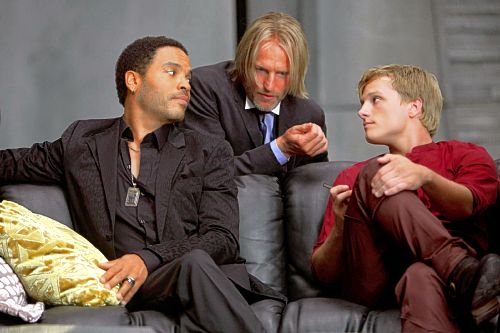
Regardless, the supporting cast contains some delightful stand-outs: the always-entertaining Elizabeth Banks who cites Joel Grey in “Cabaret” as the inspiration behind her Effie Trinket and Josh Hutcherson (“The Kids Are Alright”) as the passive Peeta Mellark.  Two others are severely miscast: a wooden Lenny Kravitz as Cinna and a Woody (Harrelson) as Haymitch Abernathy.  Apparently, the party every night during shooting was in Kravitz’s trailer but he brings little of that fun to the screen.  And the fact that two of the audience members in my row were asleep two hours in – and it was a 12:15 screening! – speaks to the film’s snail’s-pace.  Simon “Slumdog Millionare” Beaufoy has adapted the second book “Catching Fire” for the screen – production begins this September – and let’s hope he can give the plot the Bollywood bop it deserves.
A sinister Donald Sutherland, whose white beard is combed into a ghostly mask, plays President Snow and in the film’s final scene, we see him assessing the winners of the Games and perhaps determining what’s to come.  “Contain it,” he tells Seneca earlier in the film.  Still, what are we to make of that last look at the games’ sole survivors?  It spells sequel, but how exactly?  What’s left uncontained?

With the next three films in the works and fans ravenous for more – that’s right, Hollywood will split the third book into two films to play the game some more – it’s safe to say the Kat Fight will continue.  Let’s hope it can overcome the low blood sugar that slows down this first installment.

Review: “Casablanca” (In Re-Release; 1 Night Only)

21 Wednesday Mar 2012

Posted by colincarman in Uncategorized

≈ 4 Comments

Tags

casablanca, classic, drama, humphrey bogart, ingrid bergman, oscars, paul henreid, romantic, world war II

Grade: A (SEE IT)

HERE’S LOOKING AT YOU, KID.

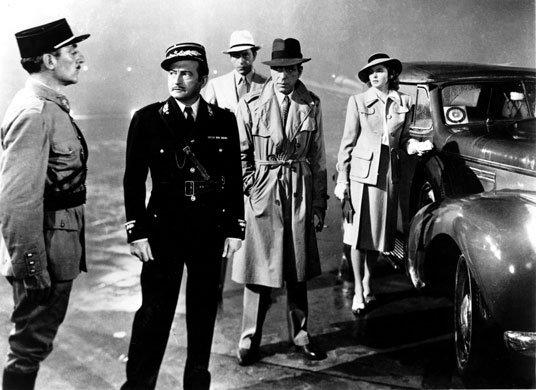
Yet 1942’s “Casablanca” (winner of three Academy Awards, including Best Picture) isn’t a kid anymore.  Tonight, to celebrate the film’s 70th anniversary, Turner Classic Movies will screen, for one night only, a digitally re-mastered edition of the classic World War II romantic drama and mainstay of Top 10 Classic Films lists.  “Casablanca” isn’t just the perfect film; it’s an iconic collection of top-shelf actors (Bogie, Bergman, Rains, Henreid, Lorre), a superb script, perfect pacing, music, melodrama, comedy…say when!

If you can’t visit Rick’s Café Américain tonight, be sure to rent a copy, which is just as well: TCM’s screening includes an introduction by Robert Osborne and commentary by that senile satyr otherwise known as Hugh Hefner (hardly worth the price of admission).  The observations of Osborne are surely worth taking in, but at this point, “Casablanca” and its basket of quotable sayings have already worked their way into popular culture: the misquoted “Play it again, Sam,” “Louis, I think this is the beginning of a beautiful friendship” (which cleverly comes at the film’s ending), and of course, “We’ll always have, Paris.”  Fortunately for film buffs, we’ll always have “Casablanca” for five, fine reasons on which you can rely:

  1. SPANNING THE GLOBE.  There are arguably thirty-five nationalities represented in “Casablanca,” the most cosmopolitan classic of all time.  At a surprisingly modern pace, it moves from Vichy-occupied Morocco to Paris with talk of America, Germany, and Bulgaria in between.  Not only are Rick and Ilsa different nationalities, united by their hatred for the Gestapo, the interracial closeness between the couple and their portable musician, Sam (played by drummer Dooley Wilson) is also forward-thinking for its time.  “Casablanca” transcends most, if not all, geopolitical borders.
  2. MAX STEINER’S MUSIC.  Described by Louis as the “most beautiful woman to ever visit Casablanca,” the luminous Bergman plays Ilsa Lund, a Norwegian ex-lover of club-owner Rick Blaine.  It’s the music that transports her and the house pianist Sam whose take on the 1930s song “As Time Goes By” sends her into a forlorn dream-state.  Enter an enraged Rick, saying “Sam!  I thought I told you never to play that –”  From there, the score by Max Steiner moves to melodramatic orchestration but incorporates bits and pieces of “As Times Goes By.”  Still, that wasn’t enough to win Steiner an Oscar for Best Original Score that year.  But that’s okay, Steiner also lost after writing the music for that little picture called “Gone with the Wind” (1939).  Heard of it?
  3. LOVE AMONG THE RUINS.  One of the many charms of “Casablanca” is that intelligently intertwines wartime politics and romance.   When the film went into general release in January of 1943, Americans already knew the city’s name because of the Casablanca conference, a meeting between Roosevelt and Churchill; the Office of War Information kept the film from troops stationed in North Africa, worried that it would stir up resentment toward Vichy supporters.  “Your business is politics,” Rick tells Captain Louis Renault and his cohorts, leaving the table.  “My business is running a saloon.”  The irony, however, is that as hard as he tries, Rick just can’t keep politics at bay since a war-time, international romance is inherently political.  During the France flashback sequence, Bergman tells Bogie: “With the whole world crumbling, we picked this time to fall in love.”  “Yeah,” Bogie mumbles, “it’s pretty bad timing.”
  4. FOR LOVE OR VIRTUE?  The major conflict of “Casablanca” resides in Rick’s last-minute decision: in the famous and final plane hangar scene, gauzed in fog and especially beautiful in black-and-white, the boozy club-owner in a white tuxedo must hang onto the woman he loves or help her and her husband, a Czech resistance leader, escape Morocco (with the Nazi noose tightening) in order to continue the collective fight against Hitler?  Alongside another World War II dilemma, “Sophie’s Choice” (1982), there’s forty years before, Rick’s choice in “Casablanca.”
  5. LIGHTS, CAMERA, ACTION!  Directed by Hungarian-American Michael Curtiz (“Yankee Doodle Dandy,” “White Christmas”), “Casablanca” is that rare film in which production , plot, and performance are all perfectly matched.   Amazingly, Warner Brothers, in the early 1940s, pumped out a picture nearly once a week and Curtiz’s classic was just one on the assembly line.  And yet  “Casablanca” is the exception; like fine wine, it just gets better with age.  Naturally, this film has a phrase for that, too.  As Sam sings, it’s “You must remember this/as times goes by…”

In Memoriam: Whitney in “The Bodyguard” (1992)

12 Monday Mar 2012

Posted by colincarman in Uncategorized

≈ 4 Comments

Tags

dolly parton, jodie foster, john hinkley, kevin costner, lawrence kasdan, the bodyguard, whitney houston

“The Bodyguard” (1992)

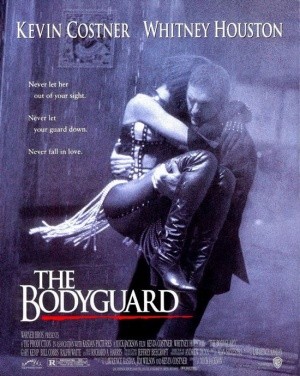
“THERE’S A BIG difference between wanting to die and having no fear of death.”  That’s Kevin Costner teaching the late Whitney Houston (1963-2012) a thing or two in the romantic thriller, “The Bodyguard” (1992).  The love-birds have just seen a samurai film, one that Costner’s character has seen sixty-two times, and strolling along the sidewalk toward dinner, Houston asks: “And because he had no fear of death, he was invincible?”  “What do you think?” queries Costner.  “Well,” she smiles, “he sure creamed them all in the end.”  We all know where dinner and a movie typically lead.  Back in his basement, Costner dramatically unwraps Houston’s  scarf, tosses it in the air, only to let it fall and separate on his samurai sword.  Paging Dr. Freud!

Two decades on, the plot of “The Bodyguard” is not only familiar but simple: before the supremacy of J.Lo and J.T. there was the fictional Rachel Marron, that “triple-threat” of actress-singer-dancer aptly embodied by Houston herself.  She enlists the protection of Frank Farmer, a former Secret Service Agent who rues the day he didn’t do enough to protect Reagan from his assassin John Hinkley Jr. who, in 1981, thought killing the President would win over his obsession, Jodie Foster.  (Speaking of the obsessive re-watching of films, Hinkley saw “Taxi Driver” at least fifteen times.)   Originally, Lawrence (“The Big Chill”) Kasdan wrote the script for “The Bodyguard” in the 1970s for Steve McQueen and Diana Ross.

Still far from her own untimely end at the age of 48, Houston’s big-screen debut in “The Bodyguard” was just the beginning of her movie career.  She made two more films – “Waiting to Exhale” and “The Preacher’s Wife” – before returning to the studio in 1998.  At her zenith, Houston’s vocals spanned an astounding three octaves and she showed, with her Super Bowl performance of 1991, that “The Star Spangled Banner” was about as easy to sing as “Happy Birthday.”  At the time of her death in Beverly Hills one month ago, she was reportedly proud of her comeback performance in a remake of the 1976 film “Sparkle.”  We’ll get the chance to see the mezzo soprano sparkle one last time this summer with the film’s posthumous release.

Looking back, much of “The Bodyguard” feels flat and dated: the slow-motion assassination attempt on stage at the Oscars, that nifty James-Bond karate chop that can knock a man out with just one jab to the neck, the weepy epilogue in which Frank and Rachel bid their adieus on the tarmac before Rachel changes her mind, ordering her pilot to “Wait!” and running back into Farmer’s arms.  Of course, “The Bodyguard” the film is less memorable than “The Bodyguard” the soundtrack, which grossed over 400 million dollars worldwide and went platinum 17 times over.  Its crown jewel, “I Will Always Love You” spent an unprecedented 14 weeks at No. 1 in America (at one point, moving a million copies a week.)  It was actually Costner that suggested she cover Dolly Parton’s 1974 country ballad.  (He and Houston fought the record company to add the 45-second a cappella introduction.)   In the film, hearing it in the bar Farmer takes her to, she asks: “This is a cowboy song, huh?”  “Yeah,” Farmer replies.  She laughs into his shoulder, and confesses: “I mean, it’s so depressing.  Have you ever listened to the words?”  The two laugh.  “It’s one of those someone-is-always-leaving-somebody songs.”

In terms of the art-life overlap, it’s striking that though Houston, as Rachel, is surrounded by handlers, publicists, choreographers, family members, and, of course, her bodyguard, she’s still so vulnerable, her life imperiled.  “I’m here to keep you alive,” Farmer tells her.  One of the ironies of Houston’s turn in “The Bodyguard” is that, on-screen as well as off, she was in desperate need of a better protector and guardian angel.  In the end, I guess Houston’s biggest film has become one of those someone-is-always-leaving-somebody kind of movies.

Review: “Silent House”

11 Sunday Mar 2012

Posted by colincarman in Film Reviews

≈ 13 Comments

Tags

adam trese, chris kentis, elizabeth olsen, eric sheffer stevens, haunted house, horror, kurt cobain, laura lau, martha marcy may maylene, silent house

“Who Can It Be Now?”

Grade: C+ (SKIP IT)

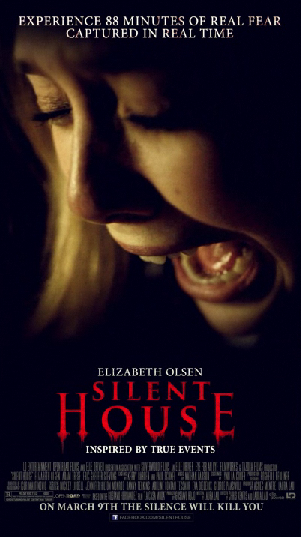
DREAM House. SAFE House.  FULL House’s Olsen twins and their kid sister Elizabeth whose Silent House is a mixed bag of a horror film and Elizabeth Olsen’s second major effort on screen (following last year’s “Martha Marcy May Maylene”).  There’s little doubt that Olsen’s star will continue to rise, but “Silent House” is hardly the film to pave the way: it’s a slow-burner that never quite ignites; it’s built on the hoariest of horror flick clichés – the haunted house – with an unspeakable crime at its center that’s scarier than any of the film’s few jumps and jolts.

As Sarah, Olsen is stranded inside a family vacation home already boarded-up and ready for sale.  She’s flanked by her father (Adam Trese) and uncle Peter (Eric Sheffer Stevens) who bicker in a jovial, brotherly way as Sarah packs up her childhood belongings and carries a lantern from room to room.  The creepiness of her Dad’s affect – is he looking out for his young daughter or looking down her low-cut shirt? – should tip any perspicacious viewer off to the film’s central trauma.  Sarah appears on edge and when something goes bump in the night, her father assures her: “Honey, it’s an old house.  They make noise.”  But this is a silent house, remember, and its worst memories are kept hush-hush.

The most noteworthy aspect of “Silent House” is its cinematography, particularly the moody aerial of Sarah perched on a rock by the water at the film’s opening.  Directed by Chris Kentis and Laura Lau, “Silent House” purports to be shot in real-time and in virtually one continuous close-up shot of Olsen’s panicked pallor.  (Here, it follows in the footsteps of the Uruguayan Spanish-language original, “La Casa Muda,” released in 2010).  Perhaps Kurt Cobain screeched it best back in 1991: “With the lights out, it’s less dangerous/Here we are now, entertain us.”  The lights are out in “Silent House,” and since its real horror can’t be fully known (nor shown), you’ll likely find yourself less than entertained.

Review: “Wanderlust”

01 Thursday Mar 2012

Posted by colincarman in Film Reviews

≈ 6 Comments

Tags

alan alda, comedy, david wain, hbo, hippies, jennifer aniston, joe lo truglio, ken marino, kerri kenney silver, lauren ambrose, linda lavin, malin akerman, michael ian black, michaela watkins, paul rudd, paul theroux, wanderlust

“Tahini Green”

Review: B (RENT IT)

BELIEVE IT OR not, it’s been fourteen years since Jennifer Aniston and Paul Rudd first co-starred in “The Object of My Affection,” a bold rom-com (for its day) about a New Yorker named Nina who falls for her gay best friend George.  By now, Aniston and Rudd, two of the most prolific comic actors on screen, are masters of the straight face, that concealment of laughter and/or derision.  “Wanderlust” (directed by David Wain of “Role Models” and “Wet Hot American Summer”) is a reunion of sorts, both for Aniston and Rudd, as well as for members of the ‘90s-era MTV sketch troupe, The State, such as Kerri Kenney-Silver (“Reno 911”), Michael Ian Black and Joe Lo Truglio.  (Stay for the outtakes and see the actors lose it.)  This time around, Rudd plays it straight as the grounding force in a comedy about a hippie commune in north Georgia populated by kooks, yogis, and nudists.  Because Aniston delivers a comedy seemingly every full moon, her flicks are a bit like pistachios: only one in a batch is truly savory and “Wanderlust” is that flick, affectionately light-hearted and genuinely funny.

As George (again) and Linda, Rudd and Aniston are New Yorkers (again) struggling to make it in a city later defined by three things: “Stress. Blackberries.  Sleeping Pills.”  Wain’s comedy opens with the couple, perfectly matched as a pair of motor-mouth Manhattanites, buying what their realtor (Linda Lavin) calls a “microloft” in the West Village.  There’s barely room for them to lower their Murphy bed.  But George abruptly loses his job just as Linda’s pitch to HBO to buy her dead-serious documentary falls through.  A pregnant exec at HBO shoots down Linda’s project about penguins with testicular cancer, telling her: “We do violence and heartache.  But it’s sexy.”  Off the couple goes to visit George’s brother Rick (played by Ken Marino, also the film’s co-writer) and zombie-like wife (a scene-stealing Michaela Watkins) who tells Aniston at her fancy margarita mixer:  “I have a little Sky Mall problem.”  Their pathetic existence within a McMansion sends the couple back to the hippie commune, Elysium, which they stumbled upon only nights before.  They’re taken to the leader, Seth (an unshaven Paul Theroux), who waxes philosophic on veganism, anti-materialism, but when he sings the praises of free love and wife-swapping, it’s really Aniston he wants.

Apart from the commune’s patriarch (an unshaven and always likable Alan Alda), there are some great supporting cast members, namely Lauren Ambrose (“Six Feet Under”) and Malin Akerman (“Couple’s Retreat”), the latter of whom has her eyes on Rudd.  Elysium’s motto?  “We share everything here.”  Laughs aside – and there are plenty – “Wanderlust” is diagetically deranged: this urban couple is hardly the type to last long in a commune, even if it is an “intentional community” as Seth terms it, and the film goes on long after the thrill of “Wanderlust” is gone.  If drama’s pitfall is sentimentality, the death of any comedy is sheer stupidity and there are a few truly dumb moments in “Wanderlust,” especially the pep-talk Rudd gives himself before trying to even the score with Aniston-Theroux and bedding (but blowing it) with Akerman.  Much of the comedy also is a transparent opportunity to see Aniston in jean cut-offs, cowboy boots, and camisoles.  Call it (Bob) Marley and Me.  Neverthless, the couple’s choice between deadening conformity and free-spirited escapism rings true.

2011 Best Actress: Davis or Streep?

20 Monday Feb 2012

Posted by colincarman in Film Reviews

≈ 3 Comments

Tags

iron lady, margaret thatcher, melissa mccarthy, meryl streep, oscars, the help, viola davis

“THERE IS NO such thing as society,” Margaret Thatcher famously remarked.  There is, however, such thing as the Oscar and soon, five leading ladies – Glenn Close, Rooney Mara, Michelle Williams, Viola Davis and Meryl Streep – will get their chance to pick up the golden calf of the film-acting world.  Having just caught Streep as British Prime Minister in “Irony Lady,” I have good reason to predict that her competition, Viola Davis (“The Help”), will pick up her first gold-guy next Sunday night.  There are five reasons why, in fact, Davis will triumph one week from tonight:

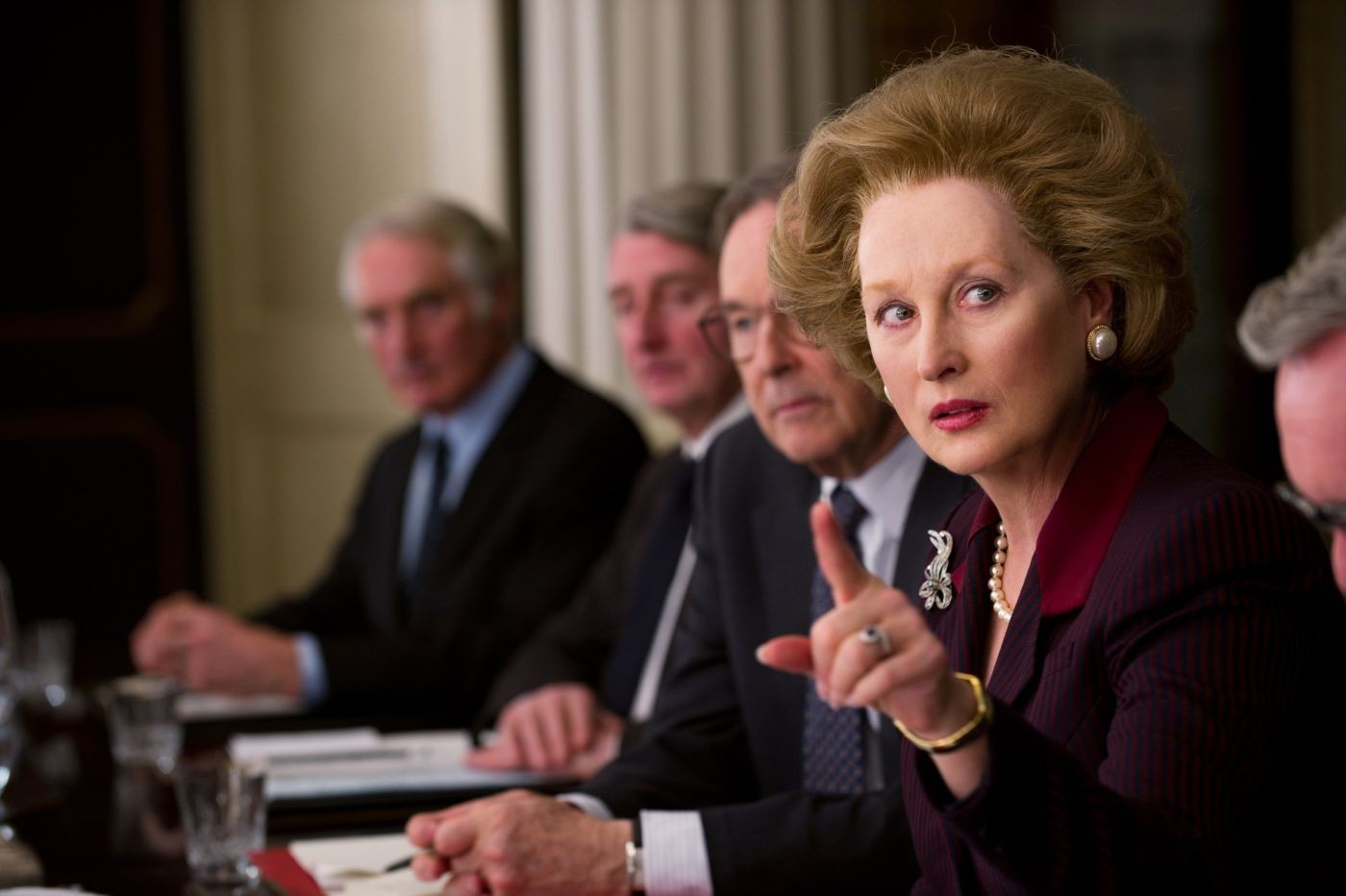
  1. It’s the Movie, Stupid:  By now you’ve likely heard or read that “Iron Lady” (directed by Phyllida Lloyd, from a script by Abi Morgan) is less than a perfect film.  Actually, it’s a scrambled egg of a story and one that talks out of both sides of its mouth: heroizing its steely subject while also humiliating her.  Ruling for eleven years, Mrs. Thatcher was a polarizing leader who became the first prime minister since Lord Liverpool in 1812-27 to win three successive elections.  What “Irony Lady” does, cruelly so, is reduce her to a lady who irons (laundry) and talks to the spectre of her beloved husband.  As Dennis Thatcher, Jim Broadbent keeps popping up like a cross between Marley’s Ghost and a jack-in-the-box.  Even more confounding is that a biopic which features Maggie protesting, “I cannot die washing up a teacup,” actually ends with Maggie washing a teacup.  The GOP would practically combust if a film ostensibly about Ronald Reagan condensed his achievements to sound-bites and portrayed him as the Madman of Simi Valley, wandering the hallways in his pajamas and crying out for Nancy.
  2. Been a While, But Streep’s Got Two Already:  Streep is the Madonna of cinema.  Yes, she’s nearly a decade older than the Material Girl but she’s a ruthless impersonator and proof that indeed women can command the stage and screen over the age of fifty.  Yes, it’s been a while since she sealed the deal – her first Oscar Nomination, for “Deer Hunter” in 1978, is as old as I am, and her two wins followed in quick succession (for “Kramer vs. Kramer” in 1979 and “Sophie’s Choice” in 1982) – but she’s the most-nominated living movie actress and may remain so, at least until the performance and the film are better matched.
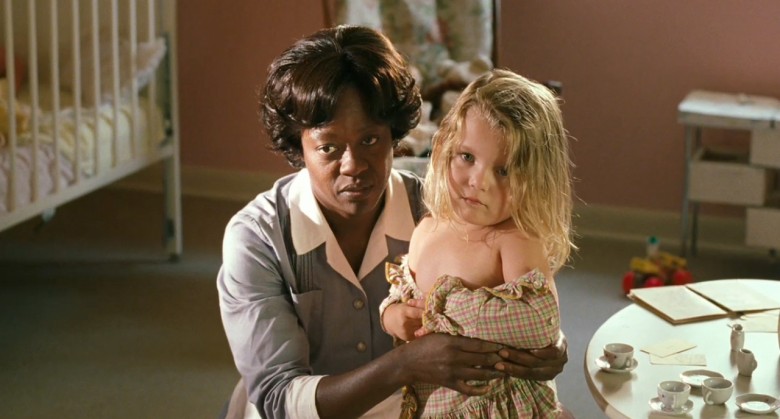
  3.   Aibileen as the Heart of “The Help”:  Coincidentally, Davis earned a Best Supporting Actress Oscar nomination for just eight minutes’ worth of screen time with Meryl Streep in “Doubt” (2008).   Davis has a fascinating face – deep, protuberant eyes always on the verge of crying – and she’s the emotional core of “The Help” who provides our white heroine Skeeter with first-person accounts of her race-based humiliations.  One of Skeeter’s questions, which we hear twice, is even sadder the second time: “How does it feel to raise white children while your own children are being raised by someone else?”  Unsure, or perhaps afraid, to answer, Aibileen can only stare at the portrait of her dead son (the victim of a racial hate crime) on her kitchen wall.  A movie is only as good as the memories it leaves you, and that singular scene stings the day after.
  4. Is Davis Drama’s Version of Melissa McCarthy?:  The other estrogen-driven ensemble film of 2012 is “Bridesmaids” and the unforgettable supporting member of that cast, Melissa McCarthy (as the frisky Megan), has been repeatedly singled out, even for a Best Supporting Actress, as the stand-out of the ensemble.   The Academy may want to honor the baby, though not the bathwater, by elevating Viola Davis above all others, honoring a perfect performance in a less than perfect film.
  5. Always Bet on Black (Unless You’re Oscar): It’s jaw-dropping to think that only one black woman has won movie-acting’s highest achievement: that’s Halle Berry in 2001’s “Monster Ball.”  Yes, 2001, in a film in which the late Heath Ledger co-starred.  Been a while, indeed.  Last year’s “The Help” is only the third film in movie history to feature black nominees for both Best Actress and Best Supporting Actress and made Davis, alongside Whoopi Goldberg, the most nominated black actress with just two nominations (Streep has an astounding 17 nominations, not to mention 26 Golden Globe nominations).

Note to Oscar: help yourself and give the gold to Viola (“The Help”) Davis!

Postscript: The 2011 Oscar for Best Actress went to Streep.


Review: “This Means War”

18 Saturday Feb 2012

Posted by colincarman in Film Reviews

≈ 4 Comments

Tags

angela bassett, bromance, chelsea handler, chris pine, mcg, reese witherspoon, romantic comedy, simon kinberg, the new york times, til schweiger, timothy dowling, tom hardy

“Bizarre Love Triangle”

Grade: F (SKIP IT)

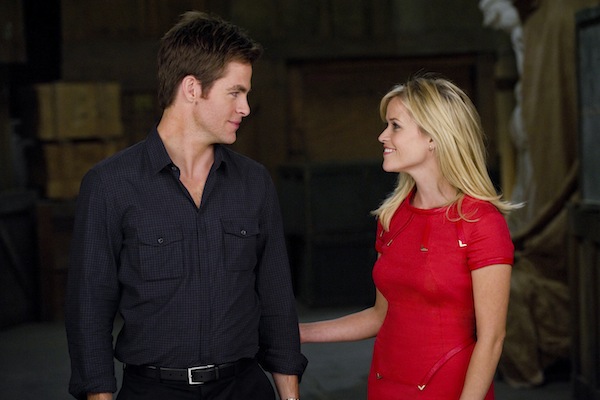
A HEAPING PILE of celluloid excrement, “This Means War” is the first bonafide bust of a film released in 2012.  Reese Witherspoon walks the line as Lauren, the object of affection for not one but two undercover CIA agents, played by Chris Pine (“Unstoppable”) and Tom Hardy (“Warrior”).  Numbly named FDR Foster and Tuck, the men are in Hong Kong and on the hunt for a criminal named Heinrich (Til Schweiger).  When they botch the mission, their boss (played by Angela Bassett) demotes the two to desk duty.   Enter Witherspoon as Lauren, a product testing exec who, prompted by friend Trish (Chelsea Handler playing Chelsea Handler), joins a dating website and meets Tuck and later, FDR.  When the men realize they’re dating the same woman after showing each other Lauren’s picture on their laptops, they make a gentleman’s agreement and begin the love-game: may the best man win.  From there, the forgettable plotline involves tranquilizer darts, romantic pizza dinners, and one image that aptly mirrors the film itself: a car going off an unfinished bridge.

“This Means War” is directed by the mononymous McG (“Charlie’s Angels”) from a script by Timothy Dowling and Simon Kinberg, the latter of whom wrote “Mr. and Mrs. Smith” and has basically retooled that earlier script about special agents on the down-low.  And speaking of the down-low, the most remarkable thing about this unremarkable romantic comedy is the length to which FDR and Tuck go to get the girl in a film where the real love story is a bromance between two very undercover agents.  (The same could be said of Lauren’s closeness to Trish insofar as the film’s strongest bonds are same-sex.) The fact that the men plant bugs and hidden cameras in Lauren’s home to spy on her – or could it be each other? – isn’t just creepy and unfunny but deeply homosocial.

Film critic Manohla Dargis of The New York Times writes that when “the men’s rivalry soon escalates into a spy versus spy shenanigans […] you’re watching a cuddly stalker flick,” but an even more astute angle on “This Means War” can be found in the work of Gayle Rubin who, as queer theorist Eve Sedgwick once wrote, argued that “patriarchal heterosexuality can best be discussed in terms of one or another form of the traffic in women: it is the use of women as exchangeable, perhaps symbolic, property for the primary purpose of cementing the bonds of men with men.”  This means that the most curious scenes are those between FDR and Tuck and that, when Lauren enters, it’s not so much war but a bore.

The Times’ Dargis also believes Witherspoon to be miscast, writing: “She’s too calculating and self-contained a presence for most romances.”  What do you think: is Witherspoon too feisty for such light fare?

Review: “Safe House”

10 Friday Feb 2012

Posted by colincarman in Film Reviews

≈ 10 Comments

Tags

action, brendan gleeson, cape town south africa, cia, daniel espinosa, david guggenheim, denzel washington, richard pearson, ryan reynolds, safe house, sam shepard, vera farmiga

“Off the Res”
Grade: B+ (SEE IT)

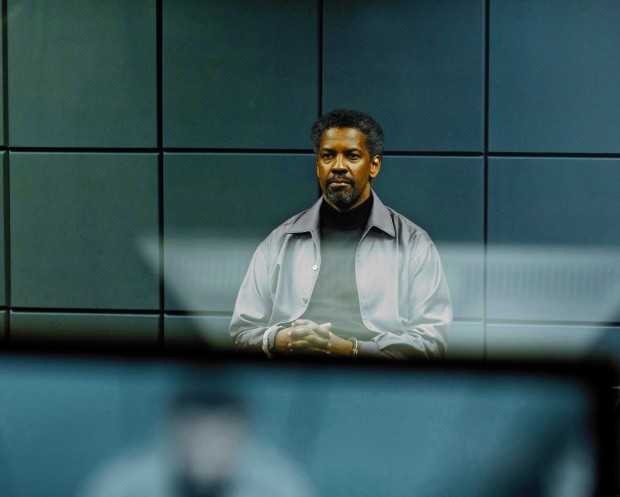
TO SAY THAT “Safe House” moves at breakneck speed is an apt description given one dazzling sequence in which rogue CIA operative Tobin Frost (played with great aplomb by Denzel Washington) escapes a BMW’s trunk, through the backseat, only to strangle the car’s driver, fellow agent Ryan Reynolds, from behind.  The unrelenting action of “Safe House,” expertly choreographed by Swedish director Daniel Espinosa, makes the film more unstoppable than Washington’s last film, “Unstoppable,” more full of bullets ricocheting than his “Ricochet” of 1991.  “Safe House” barely slows down to catch its breath and when it does, it’s aided by a strong cast including Vera Farmiga, Sam Shepard, and Brendan Gleeson, all of whom demonize Frost for going, as they put it, “off the res.”

Frost’s first line in the film, “This is not a negotiation,” along with the remarkable deftness with which he pulls of a high-stakes operation, alerts us to his steely, sociopathic nature.  Intermittently captured, then lost, by Reynold’s character Matt Weston, Frost is a supreme source of mystery: like a Dr. Lecter, he uses his psychological acumen to get under Weston’s skin with a probing I’m-just-like-you/you’re-just-like-me approach.   The CIA, meanwhile, describes him as a “notorious” and “expert manipulator of human assets,” but we’re not sure why.  Only later in “Safe House” do we realize our alliances are misguided, thereby proving another of Frost’s aphorisms, which he imparts to Weston: “Everyone betrays everyone.” The relationship between the two men, which begins as a simple cat-and-mouse pursuit but develops into something deeper, unfolds in a Bourne-like world in which political espionage and double-crosses collide.  In fact, David Guggenheim’s script is well served by editor Richard Pearson (“The Bourne Supremacy”) who juggles multiple scenes like he’s spinning plates.

There are some minor improbabilities in “Safe House” that catalyze the action but make no real sense.  Why would the CIA dispatch Weston, for example, to a crowded sports arena to pick up a GPS device when all hell can, and does, break loose with a wily Frost in custody?  Are there no quiet spots, like a Mailbox Etc., in Cape Town?  Does it really take more than 24 hours for the brass in Langley, Virginia to catch a flight to South Africa and help out the flailing Weston with Public Enemy #1?

Then again, it’s all about the action in “Safe House,” which crashes into you with shoot-outs, screaming mobs, sniper fire, and a veritable bloodbath that sends Reynolds flying through windshields and windows, all of which make it safe to say that “Safe House” is the first true action film of 2012.

Review: “The Woman In Black”

05 Sunday Feb 2012

Posted by colincarman in Film Reviews

≈ 3 Comments

Tags

ciaran hinds, daniel radcliffe, dickens, dracula, harry potter, haunted house, horror, janet mcteer, susan hill, the woman in black

“Scary Potter”
Grade: B- (RENT IT)

THE VICTORIANS MAY not have invented the tale of the haunted house but they sure as hell perfected it.  There’s the “dreadful house” in Elizabeth Gaskell’s “The Old Nurse’s Story” – hand-chosen by none other than Mr. Charles Dickens for his journal Household Words in 1852 – outside which an “evil child” lurks in the snow.  Then there’s Dracula’s love-pad which Stoker describes as a “vast ruined castle, from whose tall black windows came no ray of light, and whose broken battlements showed a jagged line against the moonlit sky.”

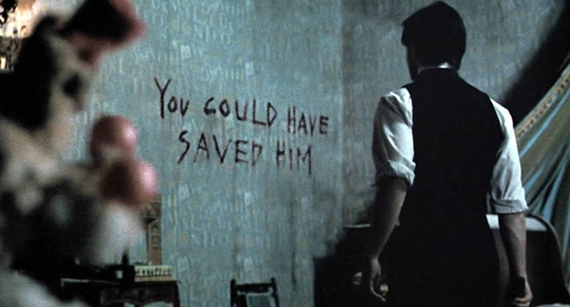
True to vampiric roots, Hollywood has sucked the life out of most, if not all, of the horror tropes bequeathed to us by the Victorians and “The Woman in Black,” director James Watkins’ new film, from a Susan Hill novel from 1983, is no exception.  Set in the early 1900s, it’s as chockfull of clichés – dead kids, rocking chairs, handprints on window panes, doors that grind and groan as they open – as it is candles, antique dolls, and things that go bump in the night.  One more close-up of a cymbal-banging monkey toy and I would have gone bananas.  Nevertheless, the titular woman is one scary chick and proof that a motionless silhouette standing in head-to-toe black amongst headstones still has the power to unnerve us.

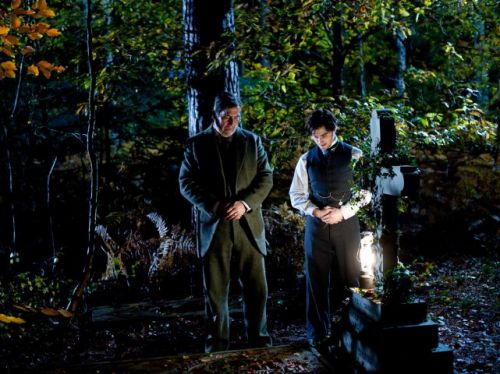
The house in question, including its family cemetery, is for sale and that’s where lawyer Arthur Kipps (played by Daniel Radcliffe) comes in:  leaving his son behind, the young widower travels by train to a north England village called Crythin Gifford to prepare the house for purchase.  If the villagers look as if they’ve seen a ghost, that’s because they have. Ignoring their warnings, Arthur traverses the marshlands surrounding the estate and begins poking around.  The only local who doesn’t pull down the shade as Kipps approaches is Mr. Daily (played by the great Ciaran Hinds with his doleful eyes and downturned mouth).  Mrs. Daily (Janet McTeer) is grieving the death of their son Nicholas and carving the image of a hanged woman in her dining room table with a butter knife.  If this doesn’t get those thick eyebrows on Radcliffe raised, the supernatural somersaults he sees once inside the house certainly do.   Yet his friend Mr. Daily remains a skeptic.  “It’s just an old place,” he tells Arthur, “cut off from the world.”

Not so, Arthur learns the hard way, and the best portion of “The Woman in Black” is its last act when all the apparitions come out to play; despite its 95-minute running time, it still feels long, as marshy and slow-going as those wagon wheels stuck in the wetlands outside.  Very little here feels freshly inspired though it manages to get under your skin without a heavy dose of blood and guts.

Consider it Radcliffe’s post-Potter depression.

Review: “The Grey”

01 Wednesday Feb 2012

Posted by colincarman in Film Reviews

≈ 6 Comments

Tags

action, alaska, dallas roberts, dermot mulroney, frank grillo, ian mackensie, jaws, joe carnahan, liam neeson, nature, nonso anozie, the a-team, the grey

“Wolves on Film”

Grade: B (RENT IT)

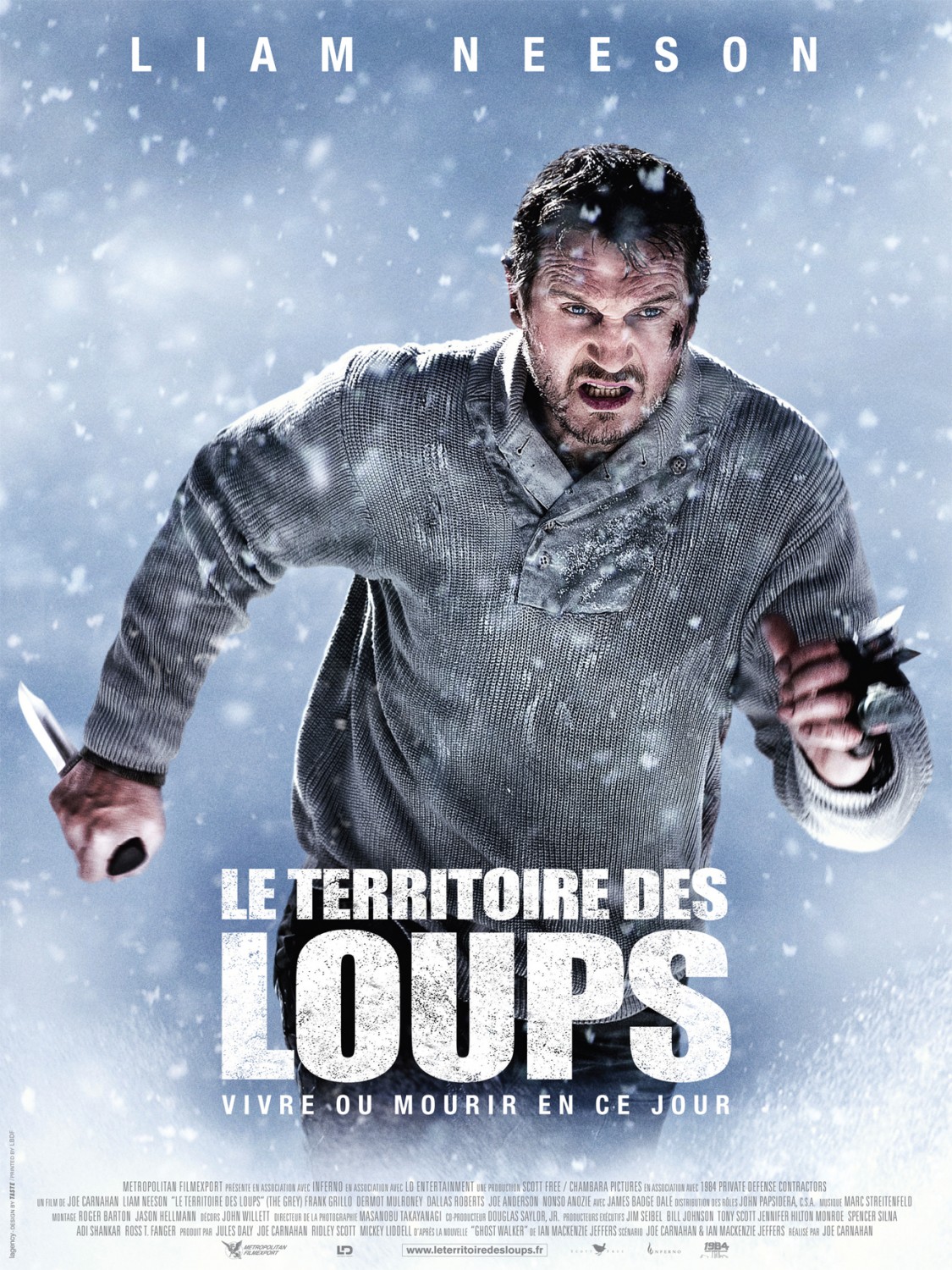
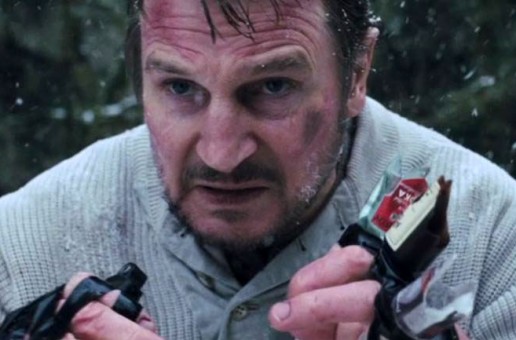
REMIND ME TO shell out the extra forty bucks and check action star Liam Neeson as my carry-on luggage when I next traverse Alaska in the dead of winter, in a howling storm.  To the passengers of the luckless aircraft that makes a crash landing, the experience is terrifying – a plane breaking apart hasn’t sounded this cacophonously life-like since “Cast Away” (2000) – but to the wolves on the ground, it’s lunch and dinner.  Where is Sarah Palin and her high-power rifle when you need her?

In “The Grey,” directed by Joe Carnahan (“The A-Team,” “Smokin’ Aces”) from a script co-written with Ian Mackenzie Jeffers (from his story “Ghost Walker”), Neeson plays a survivalist man on the ground named Ottway, conveniently a wolf-hunter working for a big-oil company who, post-crash, becomes the hunted.  The solemn voice-over narration, alongside the lupine howls of the white wilderness, that open Carnahan’s film alert us to some of its more unconventional aspects: a suicidal protagonist, pauses in the action to meditate on faith and providence, and the utter irresolution of the ending which left one loud-mouth in my local theatre yelping: “That better not be the ending!”

Then there’s Neeson himself who, Roman nose and all, hasn’t exactly hung up his acting hat but turned, as of late, to fast-paced action films in which he stoically takes on European prostitution rings and identity-thieves (i.e. the convoluted “Unknown”).  Since “Taken,” the finest action film from the 2000s in terms of sheer pacing, Neeson has been honing a particular set of skills – “skills,” as he menaces there,” that make me a nightmare for people like you.”

He’s met his match in “The Grey” wherein a bloodthirsty pack of wolves and the unrelenting forces of nature bear down on him and his men, an equally fine group of actors including Dermot Mulroney, Nonso Anozie, Dallas Roberts, and Frank Grillo.  It’s a motley crew – all bearded and bellicose – and the most surprising thing about “The Grey” is that the men collectively ponder spiritual matters – “Did you feel him go?” one of the men asks as a priest-like Neeson administers last rites to a dying man, “I felt him go!” – as the noose around them tightens.  There’s also a touch of humor: after killing a wolf which Neeson describes as the pack’s “omega,” they fire up the spit-roast and remark: “I’m really more of a cat person.”  As the stolid Ottway, Neeson follows in the footsteps of Robert Shaw’s Captain Sam Quint in “Jaws” (1975).  The wolf is his land-shark and he instructs the men: “They’re man-eaters and there’s blood in the air and death.”

“The Grey” doesn’t exactly rise above predictability – we know that when seven survivors set out, at least one has to wind up in a body-bag (or is it doggy-bag?) – but the filmmakers do “go there” in terms of the film’s homosocial conditions.  There’s a passing reference at the start to the late Timothy “Grizzly Man” Treadwell as that “fag who likes bears.”  And when the fur starts to fly, so do anti-gay epithets like “girls” and “fairies” as each man’s masculinity is tested.  When Neeson is forced to keep his drowning friend alive via mouth-to-mouth, the film’s interest in men-in-cramped-conditions, well, bubbles to the surface.

It was at that queer moment in “The Grey” that the old diddy from Duran Duran came to mind: “I’m on the hunt/I’m after you/Mouth is alive with juices like wine/And I’m hungry like the wolf.”

← Older posts
Newer posts →

Unknown's avatar

Recent Posts

  • Review: “Monsters: The Lyle and Erik Menéndez Story” (Netflix; 2024)
  • Sign Posts!
  • What Killed Jane Austen?
  • Was Austen a Holy Roller?
  • 5 Objects of Vivid Interest

Enter your email address to subscribe to this blog and receive notifications of new posts by email.

Join 256 other subscribers

Top Posts & Pages

  • Colin Carman
  • Review: "Life of Pi"
  • Review: "Crazy Stupid Love"
  • Gone Girls!

Jane Austen

action alien alpha dog amanda seyfried animals anton yelchin blue valentine bradley cooper brad pitt bromance carey mulligan charlize theron chawton christina hendricks christopher plummer colin farrell comedy crazy stupid love crime daniel craig dickens dracula drama emma stone england ewan mcgregor family frankenstein freud gay george clooney hampshire hbo horror jack russell terrier Jane Austen jessica chastain john lithgow joseph gordon levitt jude law kurt cobain mad men madonna mansfield park mary shelley matthew mcconaughey michael fassbender naomi watts oscars paris paul rudd philip seymour hoffman poetry politics portsmouth pride and prejudice romantic romantic comedy ryan gosling science fiction september 11 sex shakespeare shelley steven soderbergh summer blockbuster the hangover the help the social network thriller tim burton true blood twilight vampires viola davis

Blog Stats

  • 56,132 hits
  • RSS - Posts
  • RSS - Comments

Colin Carman Twitter

Tweets by ColinCarman

Colin Carman

Colin Carman

Archives

  • January 2025
  • July 2019
  • May 2013
  • April 2013
  • March 2013
  • February 2013
  • January 2013
  • December 2012
  • November 2012
  • October 2012
  • September 2012
  • August 2012
  • July 2012
  • June 2012
  • May 2012
  • April 2012
  • March 2012
  • February 2012
  • January 2012
  • December 2011
  • November 2011
  • October 2011
  • September 2011
  • August 2011
  • July 2011

Blogroll

  • Cinema Train
  • Dan the Man's Movie Reviews
  • Fogs' Movie Reviews

Category Cloud

Film Reviews Jane Austen Poems and Plogs (Poem-Blogs) Uncategorized

Blog at WordPress.com.

  • Subscribe Subscribed
    • Colin Carman
    • Join 171 other subscribers
    • Already have a WordPress.com account? Log in now.
    • Colin Carman
    • Subscribe Subscribed
    • Sign up
    • Log in
    • Report this content
    • View site in Reader
    • Manage subscriptions
    • Collapse this bar
 

Loading Comments...